Weekly Update

People’s brains are more responsive to friends than to strangers, even if the stranger has more in common, according to a study in the Oct. 13 issue of The Journal of Neuroscience.

In Time magazine’s What Your Brain Looks Like After 20 Years of Marriage, Belinda Luscomb has been taking a look at the neuroscience of love.

And speaking of love, new research has also found that falling in love only takes about a fifth of a second!

And what exactly is going on in your brain if you are looking back with nostalgia at past loves? I came across a fascinating article on the neuroscience of nostalgia and memories.

Now a question for you? How many of you feel you have lost the art of writing by hand, now that we are all so computer literate these days?  Associate professor Anne Mangen at the University of Stavanger’s Reading Centre asks if something is lost in switching from book to computer screen, and from pen to keyboard and discovers that writing by hand does indeed strengthen the learning process.
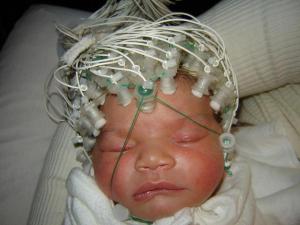

Important role of mother’s voice in activating newborn’s brain

brain activity in baby

Exciting  new research has proved for the first time that a newborn baby’s brain responds strongly to its mother’s voice.*

A research team from the University of Montreal and the Sainte-Justine University Hospital Research Centre conducted experiments  on newborn infants by performing electrical recordings within the 24 hours following their birth. Brain exploration has never before been undertaken on such young participants. 

When the baby’s mother spoke, the scans very clearly show reactions in the left-hemisphere of the brain, and in particular the language processing and motor skills circuit.

It was already well known that babies have some innate language capacities, but researchers are only just beginning to understand what these capacities are and how they work.

“This research confirms that the mother is the primary initiator of language and suggests that there is a neurobiological link between prenatal language acquisition and motor skills involved in speech,” said lead researcher Dr. Maryse Lassonde.

*Université de Montréal (2010, December 17). Mom’s voice plays special role in activating newborn’s brain. ScienceDaily.

Early childhood experiences influence the brain for life

Among the hot topics of debate at last month’s SFN meeting was that of the developing brain and how early childhood experiences, whether good or bad, influence the brain for a lifetime. 

Regina Sullivan of New York University postulates that child abuse-related epigenetic changes, which alter the brain, are passed on to the next generation, perhaps explaining the cycle of abuse observed in many families. (The development and maintenance of an organism is orchestrated by a set of chemical reactions that switch parts of the genome off and on at strategic times and locations. Epigenetics is the study of these reactions and the factors that influence them.)

The primary evidence for stress-related changes comes from human brain imaging, which has uncovered brain differences between children with a typical childhood and those who suffer abuse.

However, work being done by Bruce McEwen, professor of neuroscience at Rockefeller University in New York, shows that the effects of childhood experiences such as neglect or abuse, can be reversed through interventions such as high-quality early care and education programmes.

Source: New Scientist

See inside your brain in real time

Here’s a short video describing how recent advances in brain imaging with fMRI which allows you watch activity in discrete parts of the brain – for instance when in pain can allow you control it.  If true, the implications of this finding are staggering …and liberating for those with seemingly intractable emotional issues.