Weekly Neuroscience Update

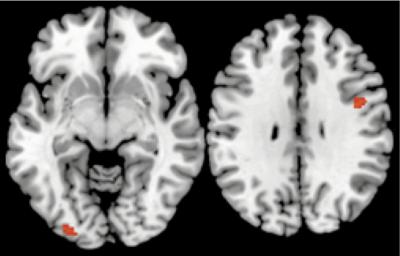
To the left of the figure, the red-yellow color denotes the regions that degenerate earlier than the rest of the brain, and are vulnerable to Alzheimer’s disease. These brain areas are higher-order regions that process and combine information coming from our different senses. To the right of the figure, each dot represents the brain data from one UK Biobank participant. The overall curve shows that, in these particularly fragile regions of the brain, there is accelerated degeneration with age. Credit: G. Douaud and J. Manuello.

In a new study published in Nature Communications, researchers investigated the genetic and modifiable influences on fragile brain regions by looking at the brain scans of 40,000 UK Biobank participants aged over 45.

Scientists have shown for the first time that a type of thinking that has been described for over a century as a developmental milestone of adolescence may grow teenagers’ brains over time.

A team of neurologists, stem cell specialists and molecular biologists affiliated with several institutions in the U.S. and led by a group at Stanford University School of Medicine has found evidence that the root cause of Alzheimer’s disease may be fat buildup in brain cells. The study is published in the journal Nature.

New research highlights the critical role of unique gut bacteria in newborns, producing serotonin to educate immune cells and prevent allergic reactions early in life.

People continuously exposed to bright, artificial light at night may be at increased risk of developing conditions that affect blood flow to the brain and having a stroke, according to research published in Stroke.

Researchers reveal new findings on the complexity of age-related memory decline and neural dedifferentiation, challenging existing theories on cognitive aging.

A new study has found that amyotrophic lateral sclerosis (ALS) and frontotemporal lobar degeneration (FTLD) exhibit strikingly similar cellular and molecular characteristics, despite affecting different brain regions and showing distinct clinical symptoms.

New research reveals how the human brain processes vital signals from the heart and lungs, offering new insights into the complex brain-body integration essential for health and cognition.

In a new study, AI processed text from health histories and neurologic examinations to locate lesions in the brain. The study, which looked specifically at the large language model called generative pre-trained transformer 4 (GPT-4), is published in the online issue of Neurology Clinical Practice.

New research shows that disturbed gut flora during the first years of life is associated with diagnoses such as autism and ADHD later in life.

Bilingualism may serve as a powerful tool against age-related cognitive decline, particularly in social cognition areas such as the theory of mind. A new study demonstrates that early bilingualism leads to beneficial structural changes in the brain, including increased gray matter volume and cortical thickness, which contribute to a stronger cognitive reserve.

In a study published in Nature Mental Health, scientists have found that individuals suffering from chronic musculoskeletal pain (CMP) may face a higher risk of brain aging.

A new analysis involving over 13,000 people has found changes to blood vessels in the brain that can increase the risk of stroke and dementia are common in people with a range of heart conditions, regardless of whether they have experienced a stroke.

A Canadian-led study has identified genes that may be partially responsible for the development of cerebral palsy.

Researchers have introduced a new, refined method for analyzing brain signals, enhancing our understanding of brain functionality. This research has the potential to improve treatments for neurological conditions such as Parkinson’s disease, pain, epilepsy and depression.

A study reveals that Lewy body disease, a major neurodegenerative disorder, may start developing in individuals as early as middle age, well before symptoms manifest.

Researchers have shown that the brain chemical GABA regulates activity in the retina of the eye in autistic and non-autistic individuals differently. Autistic people have larger responses to single light flashes in the retina of the eye and this new study shows that increasing GABA activity can reduce this response.

Finally this week, a study by the University of Sheffield has cast doubt on the efficacy of non-invasive brain stimulation techniques in improving visual working memory.
Weekly Neuroscience Update

While depression is a common problem for people who have had a stroke, some people may have symptoms of depression years before their stroke, according to a study published in Neurology.

New research shows visual scanpaths during memory retrieval tasks were associated with the quality of the memory. Researchers say the replay of a sequence of eye movements helps boost memory reconstruction.

A new neuroimaging study reveals every person has unique brain anatomy. The uniqueness is a result of a combination of genetic factors and life experiences, researchers report.

Adolescents are over three times more vulnerable to developing a cannabis addiction than adults, but may not be at increased risk of other mental health problems related to the drug, finds a new study led by UCL and King’s College London researchers.

Researchers have developed a chop stick-like device that uses a weak electrical current to stimulate the tongue and enhance the taste of salt. The device could help to reduce dietary sodium intake by up to 30%.

Socially anxious women exhibit heightened oxytocin reactivity to psychosocial stress, according to new research published in Psychoneuroendocrinology. The study provides evidence that the hormone plays a role in physiological reactions to socially stressful situations.

Delayed circadian rhythms and sleep disruptions may be a cause of teen depression, rather than a symptom that develops as a result of the mental health disorder.

Health researchers have contributed to an international study published in Nature Neuroscience that sheds light on the mechanism by which anti-anxiety drugs act on the brain which could lead to cognitive impairment in vulnerable individuals.

A new machine-learning algorithm is able to accurately detect cognitive impairment by analyzing voice recordings.

Protein buildups like those seen around neurons in Alzheimer’s, Parkinson’s and other brain diseases occur in all aging cells, a new study suggests. Learning their significance may reveal new strategies for treating age-related diseases.

Finally, this week, having positive social interactions is associated with older adults’ sense of purposefulness, which can fluctuate from day to day, according to recent research.

Weekly Neuroscience Update

Brain-MRI-by-Hongwen-Song-et-al-702x336

A research team has used neuroimaging techniques to investigate how being in a romantic relationship produces alterations in the architecture of the brain. They found that being in love is associated with increased connectivity between regions of the brain associated with reward, motivation, emotion regulation, and social cognition.

Research from McGill University reveals that the brain’s motor network helps people remember and recognize music that they have performed in the past better than music they have only heard.

The human brain can select relevant objects from a flood of information and edit out what is irrelevant. It also knows which parts belong to a whole. If, for example, we direct our attention to the doors of a house, the brain will preferentially process its windows, but not the neighbouring houses. Psychologists have now discovered that this also happens when parts of the objects are merely maintained in our memory.

Researchers have found that teens who smoked marijuana daily for several years have an abnormally shaped hippocampus and do poorly on tasks involving long-term memory.

A new study has shown how intentional recall is beyond a simple reawakening of a memory; and actually leads us to forget other competing experiences that interfere with retrieval.

Researchers have identified key cells within the brain that are critical for determining circadian rhythms, the 24-hour processes that control sleep and wake cycles, as well as other important body functions such as hormone production, metabolism, and blood pressure

New York University researchers have devised a computer model to explain how a neural circuit learns to classify sensory stimuli into discrete categories, such as “car vs. motorcycle.” Their findings, which appear in the journal Nature Communications, shed new light on the brain processes underpinning judgments we make on a daily basis.

Queensland scientists have found that non-invasive ultrasound technology can be used to treat Alzheimer’s disease and restore memory.

Researchers at MIT have developed a method to stimulate brain tissue using external magnetic fields and injected magnetic nanoparticles — a technique allowing direct stimulation of neurons, which could be an effective treatment for a variety of neurological diseases, without the need for implants or external connections.

Researchers have come up with a new way to evaluate how well computers can divine information from images. The team describes its new system as a “visual Turing test,” after the legendary computer scientist Alan Turing’s test of the extent to which computers display human-like intelligence.

Thousands of genetic “dimmer” switches, regions of DNA known as regulatory elements, were turned up high during human evolution in the developing cerebral cortex, according to new research from the Yale School of Medicine.

Finally this week, a new study finds that giving a drug that changes the neurochemical balance in the brain causes a greater willingness to engage in prosocial behaviors, such as ensuring that resources are divided more equally.

Inside The Emotional Brain

brain activity emotions

Scientists have found a way to determine what emotions you’re feeling by looking at brain activity measured by imaging technology.

The findings, published in the journal PLOS ONE, are important to emotion research because they bring “a new method with potential to identify emotions without relying on people’s ability to self-report,” study researcher Karim Kassam, an assistant professor of social and decision sciences at Carnegie Mellon University, said in a statement.

“It could be used to assess an individual’s emotional response to almost any kind of stimulus, for example, a flag, a brand name or a political candidate.”

For the study, researchers used a combination of brain imaging — functional magnetic resonance imaging — and machine learning. They recruited 10 actors from the university’s drama school to act out different emotions, such as anger, happiness, pride and shame, while inside an fMRI scanner, for multiple times in random order.

To make sure that researchers were able to measure the actual emotions and not just the acting out of emotions, they had the study participants also look at emotion-eliciting images while undergoing FMRI brain scans.

“Despite manifest differences between people’s psychology, different people tend to neurally encode emotions in remarkably similar ways,” study researcher Amanda Markey, a graduate student in the Department of Social and Decision Sciences at the university, said in a statement.

Source: Huffington Post

Weekly Neuroscience Update

brain imaging research fr

New brain imaging research from Carnegie Mellon University provides some of the first evidence showing how the brain unconsciously processes decision information in ways that lead to improved decision making. Credit: Carnegie Mellon University

When faced with a difficult decision, it is often suggested to “sleep on it” or take a break from thinking about the decision in order to gain clarity. But new brain imaging research from Carnegie Mellon University, published in the journal “Social Cognitive and Affective Neuroscience,” finds that the brain regions responsible for making decisions continue to be active even when the conscious brain is distracted with a different task. The research provides some of the first evidence showing how the brain unconsciously processes decision information in ways that lead to improved decision-making.

A study from Karolinska Institutet in Sweden has shown that neurons in our brain ‘mirror’ the space near others, just as if this was the space near ourselves. The study, published in the scientific journal Current Biology, sheds new light on a question that has long preoccupied psychologists and neuroscientists regarding the way in which the brain represents other people and the events that happens to those people.

New drugs which may have the potential to stop faulty brain cells dying and slow down the progression of Parkinson’s, have been identified by scientists in a pioneering study which is the first of its kind.

Neuroscientists have discovered that a virtual-reality hand, which is synchronized to “pulse” in time to an individual’s heartbeat, creates the illusion in the brain of “body ownership” – with the brain believing the hand is part of its own body.

Cornell researchers have developed a reliable method to distinguish memory declines associated with healthy aging from the more-serious memory disorders years before obvious symptoms emerge. The method also allows research to accurately predict who is more likely to develop cognitive impairment without expensive tests or invasive procedures.

People who suffer from the common gastrointestinal disorder irritable bowel syndrome (IBS) have more stress-related memory problems than others, according to a new study. The researchers also found that levels of the stress hormone cortisol were related to poor memory performance. While stress has long been known to affect gut symptoms, this is the first study showing that stress also impacts on cognition in IBS.

In a new study using functional magnetic resonance imaging (fMRI), researchers have found that the same brain networks that are activated when you’re burned by hot coffee also light up when you think about a lover who has spurned you.

Study Suggests Our Brains Have a ‘Sixth Sense’

Scientists may have discovered a “sixth sense” that relates to something called numerosity, which involves the ability to rapidly assimilate the number of objects within one’s field of vision. The team behind the study used fMRI scans to highlight the activity of a key area of the brain, which seemed to alter its response based upon the number of objects perceived.

Dubbed a “number sense,” the phenomenon is believed to manifest in a part of the brain called the posterior parietal cortex, situated around the crown of an individual’s head. The study’s lead researcher, Ben Harvey, who works at the Utrecht University in the Netherlands, explained that most people don’t need to methodically count a small number of objects presented to them, “… we just know how many there are straight away.” This has led many people to maintain that a person’s numerosity powers represent something akin to a “sixth sense.”

Weekly Neuroscience Update

japanesesupe

Researchers in Japan have used the powerful K computer, the world’s fastest supercomputer, to simulate the complex neural structure of our brain.

Heavy drinking as a teenager is the single biggest risk factor for developing dementia unusually early, according to new research. A study of almost 500,000 Swedish men identified “alcohol intoxication” as a late adolescent as the most serious of nine separate risk factors for young onset dementia (YOD) – that is, dementia before reaching 65.

For the first time, researchers have documented irregular brain activity within the first 24 hours of a concussive injury, as well as an increased level of brain activity weeks later—suggesting that the brain may compensate for the injury during the recovery time. The findings are published in the September issue of the Journal of the International Neuropsychological Society.

New findings may help neuroscientists pinpoint better targets for anti-anxiety treatments.

The synapses in the brain act as key communication points between approximately one hundred billion neurons. They form a complex network connecting various centres in the brain through electrical impulses. New research from Lund University suggests that it is precisely here, in the synapses, that Huntington’s disease might begin.

In patients with early Alzheimer’s disease, disruptions in brain networks emerge about the same time as chemical markers of the disease appear in the spinal fluid, researchers at Washington University School of Medicine in St. Louis have shown.

New research indicates that teens with anorexia nervosa have bigger brains than teens that do not have the eating disorder.

Assessing consciousness in patients with severe brain trauma is a difficult challenge for doctors, as the injury effectively takes away any ability to blink, squeeze a hand or otherwise respond. But scientists have found a way to measure the brain’s response to a magnetic pulse, helping them determine a person’s level of awareness.


Speedier Scans Reveal New Distinctions In Brain Activity

Magnetoencephalography (MEG) can detect activity at the millisecond level.
(Credit: Paul Gannaway/Flickr)

A boost in the speed of brain scans is unveiling new insights into how brain regions work with each other in cooperative groups called networks.

Researchers at Washington University School of Medicine in St. Louis and the Institute of Technology and Advanced Biomedical Imaging at the University of Chieti in Italy are turning to faster technology called magnetoencephalography (MEG) to sample neural activity every 50 milliseconds.

In doing so, they’ve been afforded novel insights into the inner-workings of neural networks in resting and active brains. As the researchers report in the journal Neuron, these new insights could help us better understand how brain networks function and, in turn, better diagnose and treat brain injuries.

Read more on this story here