Weekly Round-Up

Peer pressure is hard-wired into our brains

A new study explains why people take stupid chances when all of their friends are watching that they would never take by themselves. According to the study,the human brain places more value on winning in a social setting than it does on winning when you’re alone. Scientists have identified the part of the brain responsible for controlling whether we conform to expectations and group pressure.

Does a blind person reading Braille process words in the brain differently than a person who reads by sight? Mainstream neuroscience thinking implies that the answer is yes because different senses take in the information. But a recent study in Current Biology finds that the processing is the same, adding to mounting evidence that using sensory inputs as the basis for understanding the brain may paint an incomplete picture.

New research sheds light on how and why we remember dreams–and what purpose they are likely to serve.

Child neurologist and neuroscientist Dr. Tallie Z. Baram has found that maternal care and other sensory input triggers activity in a baby’s developing brain that improves cognitive function and builds resilience to stress.

University of British Columbia scientists may have uncovered a new explanation for how Alzheimer’s disease destroys the brain.

The brains of people who relapse into depression differ from those of people who maintain a recovery, a new study shows. The results may provide insight into why some people relapse and why certain therapies may help, the researchers said.

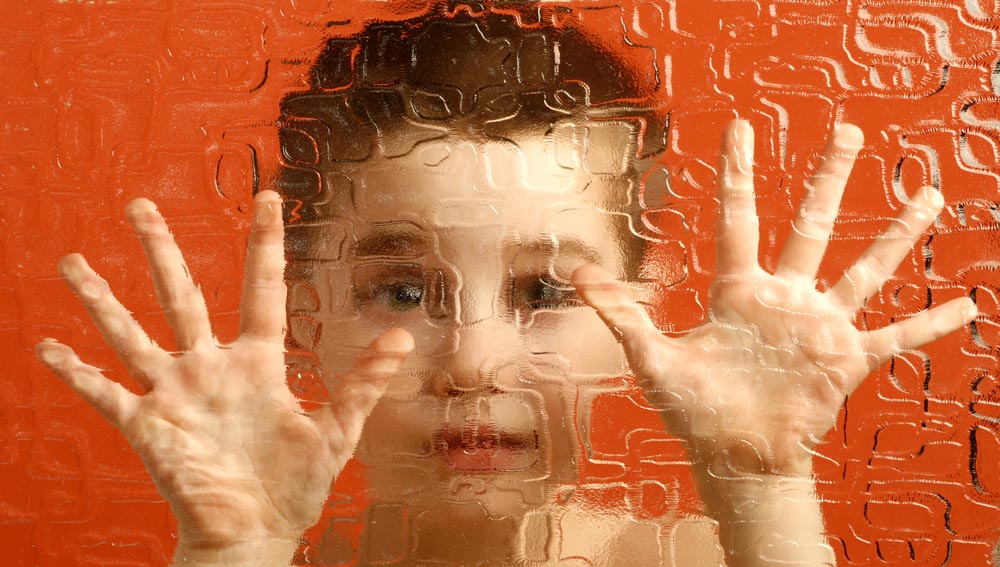
Researchers using scanning technology say they discovered physical differences in the brains of older children with autism compared to those of kids without autism.

And finally, in an effort to understand what happens in the brain when a person reads or considers such abstract ideas as love or justice, Princeton researchers have for the first time matched images of brain activity with categories of words related to the concepts a person is thinking about. The results could lead to a better understanding of how people consider meaning and context when reading or thinking.


Is the search for the cause of autism a hall of mirrors?

The ‘broken mirror’ theory is a popular theory in autism research but it seems that all is not as it appears as  a high-profile paper in Neuron reports that people with autism do not have trouble understanding others’ actions or intentions or even imitating those actions1.

Monkey see, monkey do.

Mirror neurons were discovered by neuroscientists in the 90’s while recording the activity of nerve cells or neurons in the brains of monkeys where it was noticed that certain neurons remain silent when the monkeys observe other monkeys performing the same action2 – hence the name mirror neuron.

Scientists have extended this finding in the human brain to show that nerve activity in mirror neurons also remain silent when observing another person performing an action and/or expressing an emotion3 and this silence is not observed in people with autism – hence the ‘broken mirror’ theory of autism.

Getting it “write”

However in a 2007 study 25 children with autism were compared with non-autistic ‘controls’ on several goal-directed imitation (mirror) tasks shown to activate regions of the brain believed to contain mirror neurons4. In one experiment, the children sat at a table and were asked to copy an adult as she touched a pattern of dots on the tabletop. The study showed that normal healthy children make typical errors on this task – for instance copying the adult’s goal but using the wrong hand. The children with autism made exactly the same error, meaning that they selectively imitate the goal of the action and both groups show the same pattern of brain activity in brain regions believed to contain mirror neurons. These findings suggest that there is nothing wrong with basic mirror systems in people with autism.

Hall of mirrors

Part of the problem may be that the ‘broken mirror’ theory relies on several unsupported assumptions: that the mirror system is responsible for understanding goals and imitation, that goal understanding and imitation are abnormal in autism, and that these deficits cause the social difficulties seen in autism.

It’s all about connections

One possible explanation is that the mirror neuron system itself could be normal in autism, but its projections, or the brain regions it is projecting to, could be abnormal instead.  Also, the mixed findings could be due to the broad spread of the autism spectrum disorders.

References:

  1. Dinstein, I.et al. Neuron 13, 461-469 (2010) PubMed
  2. Rizolatti G. et al. Brain Res. Cogn. Brain Res. 3, 131-141 (1996) PubMed
  3. CochinS. et al. Electroencephalogr. Clin. Neurophysiol. 107, 287-295 (1998) PubMed
  4. HamiltonA. F. et al. Neuropsychologia 45, 1859-1868 (2007) PubMed

Weekly Round Up

Pathways within the brain can be strengthened by reading and language exposure

 Recent research shows that reading  boosts brain pathways and can actually affect understanding in nearly all school subjects – a great reason to encourage the reading habit in your children.

Scientists at the University of Michigan Health System have demonstrated how memory circuits in the brain refine themselves in a living organism through two distinct types of competition between cells. Their results, published  in Neuron, mark a step forward in the search for the causes of neurological disorders associated with abnormal brain circuits, such as Alzheimer’s disease, autism and schizophrenia.

The left and right halves of the brain have separate stores for working memory, the information we actively keep in mind, suggests a study published online yesterday by the Proceedings of the National Academy of Sciences.

Over time, and with enough Internet usage, the structure of our brains can actually physically change, according to a new study.

Bringing the real world into the brain scanner, researchers at The University of Western Ontario from The Centre for Brain and Mind can now determine the action a person was planning, mere moments before that action is actually executed.

And finally good news at last for coffee addicts.For years we’ve been told that caffeinated coffee was bad for us. It’s unhealthy and addictive, doctors warned. But as vindication for all who stuck by their energizing elixir, a new study published early online in the Journal of Alzheimer’s Disease,  shows that guzzling caffeinated coffee may actually be good for our brains. In fact, it may help keep Alzheimer’s at bay.  So enjoy that cuppa joe!

Weekly Round-Up

Your brain is more responsive to your friends than to strangers

Researchers from UT Southwestern Medical Center have described for the first time how the brain’s memory center repairs itself following severe trauma – a process that may explain why it is harder to bounce back after multiple head injuries.

People with autism use their brains differently from other people, which may explain why some have extraordinary abilities to remember and draw objects in detail, according to new research from the University of Montreal.

Five more genes which increase the risk of developing Alzheimer’s disease have been identified, according to research published in Nature Genetics. This takes the number of identified genes linked to Alzheimer’s to 10 – the new genes affect three bodily processes and could become targets for treatment. If the effects of all 10 could be eliminated the risk of developing the disease would be cut by 60%, although new treatments could be 15 years away.

The sudden understanding or grasp of a concept is often described as an “Aha” moment and now researchers from New York University are using a functional MRI (fMRI) scanner to study how these moments of insight are captured and stored in our brain.

Mark Changizi is asking the question how do we have reading areas for a brain that didn’t evolve to read?

In order to develop new medications for alcoholism, researchers need to understand how alcohol acts on the brain’s reward system. A previously unknown mechanism has been shown to block the rewarding effects of alcohol on the brain, reveals a thesis from the University of Gothenburg, Sweden.

Researchers from the University of Valencia (UV)  investigating the brain structures involved with empathy have concluded that the brain circuits responsible are in part the same as those involved with violence.

And finally…your brain is more responsive to your friends than to strangers, even if those strangers have more in common with you, says a new study. Researchers looked at the brain areas associated with social information. The results of the study show that social connections override similar interests.