Weekly Neuroscience Update

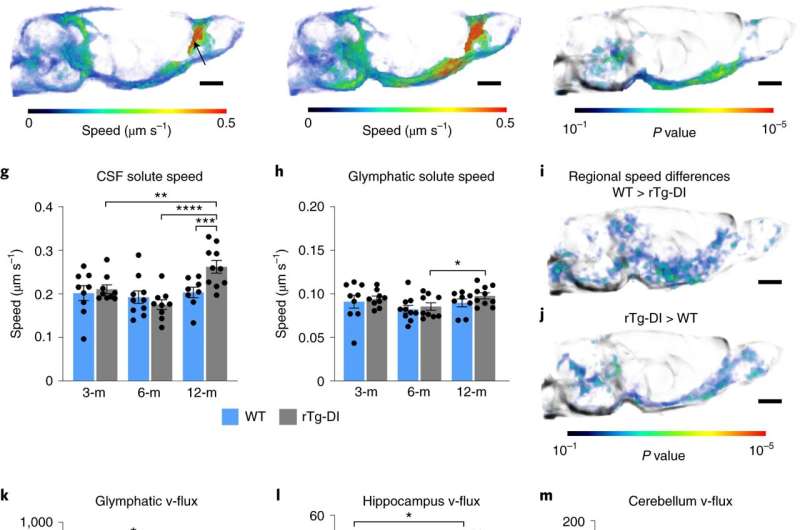
CSF flow speed becomes hyperdynamic with severe CAA. Credit: Nature Aging (2022). DOI: 10.1038/s43587-022-00181-4

A new study suggests that a contributing factor in dementia may come down to a double dose of bad waste management in the brain.

The first major study to compare brain scans of people before and after they catch Covid has revealed shrinkage and tissue damage in regions linked to smell and mental capacities months after subjects tested positive.

Light-to-moderate regular alcohol consumption is linked to reductions in overall brain volume, a new study reports.

Researchers have discovered two types of brain cells that play a key role in dividing continuous human experience into distinct segments that can be recalled later. The discovery provides new promise as a path toward development of novel treatments for memory disorders such as dementia and Alzheimer’s disease. 

Stanford Medicine researchers have linked a specific gene known to be associated with ALS with a characteristic of the disease, opening avenues for a targeted therapy.

A research group from the University of Bologna discovered the first causal evidence of the double dissociation between what we see and what we believe we see: these two different mechanisms derive from the frequency and amplitude of alpha oscillations.

A new, first-of-its-kind clinical trial will examine how the brain adapts to advanced, bionic arms in children born without a limb, with the ultimate goal of improving children’s control of their prosthetic.

People who suffer from a neurological or mental health condition are at increased risk of developing another disorder later in life. Parkinson’s disease patients are four times more likely to develop dementia, and those with mental health disorders were also at greater risk of developing dementia later in life.

Finally this week, new research shows if the circadian clock is disrupted, we might be at greater risk of retinal degeneration as we age.
Weekly Neuroscience Update

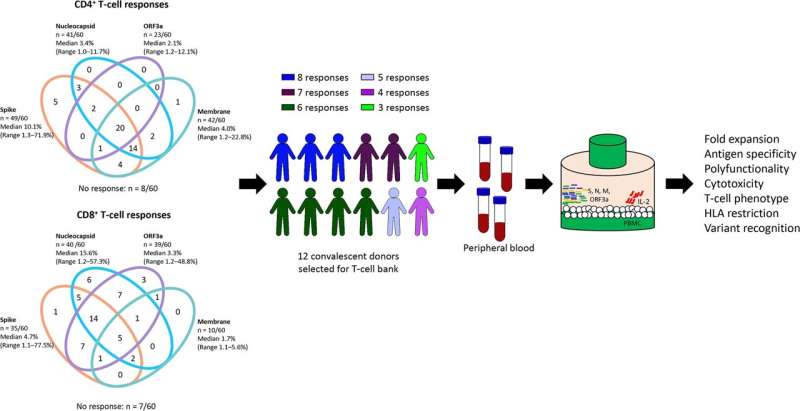
Credit: PLOS Pathogens (2022). DOI: 10.1371/journal.ppat.1010339

New research is providing hope to immunocompromised people who are vulnerable to COVID-19. Scientists have discovered promising evidence that T cell immunotherapy could help them to fight against multiple strains of the virus.

Treatments integrating music and auditory beat stimulation are effective in reducing state anxiety in some patients, according to a new study published in the open-access journal PLOS ONE.

The underlying molecular mechanisms that promote autoimmune diseases are multilayered and complex. Now, scientists have succeeded in deciphering new details of these processes. Their work supports the notion that excessive consumption of glucose directly promotes the pathogenic functions of certain cells of the immune system and that, conversely, a calorie-reduced diet can have a beneficial effect on immune diseases.

Teens who had an insecure attachment to their mothers as toddlers are more likely to overestimate the trustworthiness of strangers, a new study reports.

A new study reveals that oleic acid produced in the brain is an essential regulator of the process that enables learning and memory and supports proper mood regulation. The finding has paved the path to discovering potential new therapeutic strategies to counteract cognitive and mood decline in patients with neurological disorders.

A small study found people who received lithium, a drug commonly associated with the treatment of bipolar disorder, are less likely to develop dementia.

Scientists have found that people with Parkinson’s disease have a clear “genetic signature” of the disease in their memory T cells. The scientists hope that targeting these genes may open the door to new Parkinson’s treatments and diagnostics.

If you are forgetful or make mistakes when in a hurry, a new study found that meditation could help you to become less error-prone.

Older adults who take statin drugs have a lower risk of developing Parkinson’s disease or parkinsonism symptoms later in life compared to those who do not take statins. Researchers speculate this may be because statins have a neuroprotective effect on arteries in the brain.

Finally this week, researchers have developed a new, fully automated prosthetic arm that learns during normal use and adapts to varying conditions.

Weekly Neuroscience Update

Credit: Johnson et al.

Researchers recently carried out a large-scale analysis of the brains of patients with Alzheimer’s disease (AD). Their findings, published in Nature Neuroscience, unveiled a series of disease-related changes in protein co-expression modules, which were not identified when examining RNA networks in the same brain regions.

A new study, published in the journal PNAS, proposes how the brain stays stable despite changes in the neural code.

Cognitive decline is the biggest factor in determining how long patients with Alzheimer’s disease will live after being diagnosed, according to a new research study. The findings, published in the Journal of Alzheimer’s Disease, are a first step that could help health care providers provide reliable prediction and planning assistance for patients with Alzheimer’s disease and their families.

An increase in depressive symptoms in adolescence has been linked to ozone exposure as a result of air pollution, even in areas that meet air quality standards.

Seven in ten long COVID patients experience concentration and memory problems several months after the initial onset of their disease, with many performing worse than their peers on cognitive tests, according to new research from the University of Cambridge.

Finally this week, researchers have developed a new method for training people to be creative, one that shows promise of succeeding far better than current ways of sparking innovation.

Weekly Neuroscience Update

Credit: German Primate Center

The precision with which we perceive the real world is not stable in time, rather it rhythmically fluctuates between high precision and low precision states several times per second. These fluctuations follow rhythmic electrical activities in the brain. Electrical rhythms of the brain range across different frequencies, from 1 to 250 hertz.

Brain circuitry responsible for motivation and pleasure is activated when a person experiences pain. The findings reveal a link as to why some people may overeat when they experience chronic pain.

For the first time, neuroscientists have identified a population of neurons in the human brain that lights up when we hear singing, but not other types of music. These neurons, found in the auditory cortex, appear to respond to the specific combination of voice and music, but not to either regular speech or instrumental music. Exactly what they are doing is unknown and will require more work to uncover, the researchers say.

People exposed to more green space during the first year of the COVID-19 pandemic reported significantly less depression and anxiety, according to new research published in the journal PLOS One.

A new study links cardiorespiratory fitness in older adults to a decreased risk of developing Alzheimer’s disease. Older adults with higher levels of cardiorespiratory fitness have a 33% reduced risk for developing Alzheimer’s.

Finally this week, Nostalgia decreases activity in pain-related brain areas and decreases subjective ratings of thermal pain, according to research recently published in Journal of Neuroscience.

End of Year Neuroscience Update

Welcome to the final research update of the year. 

A new study shows that people who do vigorous physical activities, like jogging or playing competitive sports, in areas with higher air pollution may show less benefit from that exercise when it comes to certain markers of brain disease. The markers examined in the study included white matter hyperintensities, which indicate injury to the brain’s white matter, and gray matter volume. Larger gray matter volumes and smaller white matter hyperintensity volumes are markers of overall better brain health.

Long-term memory consolidation and short-term memory processes that occur during sleep do so at a cost to one another according to new research. 

In a discovery that could one day benefit people suffering from traumatic brain injury, Alzheimer’s disease, and schizophrenia, researchers have identified the characteristics of more than 100 memory-sensitive neurons that play a central role in how memories are recalled in the brain.

An observational study of more than 3,000 adults aged 65 years or older has uncovered a link between cataract surgery and a reduced risk of developing dementia, including Alzheimer’s disease.

Researchers in Japan used magnetic resonance imaging to study the brains of secondary school students during a task focused on musical observation. They found that students trained to play music from a young age exhibited certain kinds of brain activity more strongly than other students. The researchers also observed a specific link between musical processing and areas of the brain associated with language processing for the first time.

A new theory suggests consciousness is a state tied to complex cognitive operations, and not a passive basic state that automatically prevails when we are awake.

Why do so many children with autism often suffer from epilepsy? Scientists have discovered an important brain protein that quiets overactive brain cells and is at abnormally low levels in children with autism.

A newly developed self-assessment test of cognitive function can help detect early signs of dementia sooner than commonly used office-based cognitive tests.

Scientists have identified a neural mechanism that supports advanced cognitive functions such as planning and problem-solving. The mechanism distributes information from a single neuron to larger neural populations in the prefrontal cortex.

A team of researchers has found a link between the way that cells produce energy for brain function and the mutated genes found in Alzheimer’s disease.

Children with autism have abnormally low levels of the CNTNAP2 protein. The protein, which can be detected in cerebrospinal fluid samples, may serve as a new biomarker for autism and could potentially become a target to treat epilepsy that is commonly associated with ASD.

Finally, this new study brings understanding how the brain processes information one step closer.


Weekly Neuroscience Update

New artificial intelligence technology reveals previously unknown cell components. The findings may shed new light on human development and diseases.

A new mathematical model explains how the brain has the ability to continuously acquire new skills, specifically movement-based skills, without forgetting or degrading old ones. The theory, dubbed COIN, suggests identifying current context is key to learning how to move our bodies when acquiring skills.

Playing video games that are heavy on action can make you better at some new tasks. New research reveals that these games are helping by teaching players to be quicker learners.

The “background noise” in the brain disrupts long-memory signals by neurons. This noise interrupts the consistent rhythm of long-memory alpha wave signals in people experiencing identity confusion.

Memory errors may indicate a way in which the human cognitive system is optimally running, researchers say.

Housework is linked to sharper memory, attention span, and better leg strength, and by extension, greater protection against falls, in older adults, finds research published in the open access journal BMJ Open.

Repetitive transcranial magnetic stimulation (rTMS) can be used to modulate brain rhythms and cognitive behaviors related to “giving up” during problem-solving tasks.

New research reveals that specialized cells within neural circuitry that triggers complex learning in songbirds bears a striking resemblance to a type of neural cell associated with the development of fine motor skills in the cortex of the human brain.

Finally this week, a new study links a propensity to binge-watch TV shows with personality traits. Researchers found those who lack impulse control and emotional clarity are most likely to binge-watch a television series.


Weekly Neuroscience Update

Image Credit: Dartmouth College

Distinct information about familiar faces is encoded in a neural code that is shared across brains, according to a new study published in the Proceedings of the National Academy of Sciences.

A new study conducted in adults with a history of childhood maltreatment showed that two groups – those with a history of sexual abuse and those with posttraumatic stress disorder (PTSD) – had reduced brain connectivity in the attention systems known as the ventral and dorsal attention network (VAN-DAN).

New findings reveals dopamine neurons that play a role in learning and memory also drive motivation.

For the first time, researchers have used human data to quantify the speed of different processes that lead to Alzheimer’s disease and found that it develops in a very different way than previously thought. Their results could have important implications for the development of potential treatments.

Musical therapy can help to improve fine motor skills in patients with Parkinson’s disease according to new research. 

A genetic predisposition for depression combined with exposure to high-particulate-matter air pollution greatly elevates the risk that healthy people will experience depression, according to a first-of-its-kind study published in the Proceedings of the National Academies of Sciences (PNAS).

Recently published research found people who continued to spend a higher amount of time sitting between April and June 2020 were likely to have higher symptoms of depression.

A new study, published in the International Journal of MS Care, found that the vibration training improved not only physical symptoms associated with multiple sclerosis, such as increased walking speeds, but also cognitive functions, such as memory capacity and executive function.

A newly developed AI algorithm can directly predict eye position and movement during an MRI scan. The technology could provide new diagnostics for neurological disorders that manifest in changes in eye-movement patterns.

A team of researchers has found a possible connection between depression and anxiety for IBD patients and the vascular barrier in the brain choroid plexus closing. In their paper published in the journal Science, the group describes their study of the gut-brain axis response to inflammation and its link to psychiatric illnesses.

Researchers have created the first body map of sensations experienced during hallucinations in people experiencing psychosis.

Recent resarch reveals the severity of PTSD symptoms was associated with fewer risky choices and increased activation of the amygdala. Decreased activity in the ventral striatum, an area of the brain associated with processing positive valence such as reward, predicted more severe PTSD symptoms 14 months post-trauma.

Finally this week, people who consume a diet containing anti-inflammatory foods, including fruits, vegetables, and coffee, are less likely to develop dementia as they age, a new study reports.


Weekly Neuroscience Update

Researchers have investigated why many of us wake in the middle of the night and dwell on our fears.

In response to gut inflammation, such as that caused by inflammatory bowel disease (IBD), the vascular barrier in the brain choroid plexus closes, locking down access to the brain, according to a new study.

A multiyear study of older adults found that both short and long sleepers experienced greater cognitive decline than people who slept a moderate amount, even when the effects of early Alzheimer’s disease were taken into account.

A brain circuit that works as a “brake” on binge alcohol drinking may help explain male-female differences in vulnerability to alcohol use disorders, according to a preclinical study led by scientists at Weill Cornell Medicine.

The Mediterranean diet does not only have beneficial effects for the cardiovascular health of those who follow it, but it can allow them to improve their memory and prevent or delay the effects of cognitive deterioration connected to aging. 

People with higher levels of anxiety have altered perceptions of their breathing compared to those with lower levels of anxiety. The altered perception of respiration can lead to an increase in feelings of anxiety, researchers report.

Finally this week researchers reveal the neurobiological basis of why we often find it more difficult to find the right words as we age.


Weekly Neuroscience Update

When perceiving rhythm, the brain makes two separate decisions based on grouping and prominence. The groupings mutually inform each other to generate an overall rhythmic perception.

Face pareidolia, a phenomenon where the brain is tricked into seeing human faces in inanimate objects, may occur as a result of the brain processing the perceived facial expression in the same sequential way it perceives a human face. Neuroscientists at the University of Sydney now say how our brains identify and analyse real human faces is conducted by the same cognitive processes that identify illusory faces.

Researchers have identified a novel population of neurons in the temporal pole that links facial perception to long-term memory.

Adults with ADHD are at higher risk of a wide range of physical conditions, including nervous system, respiratory, musculoskeletal, and metabolic diseases, according to a large register-based study from Karolinska Institutet published in The Lancet Psychiatry.

A new study reveals very young infants can perceive objects that older infants, children, and adults can not see due to a phenomenon called visual backward masking.

Infant boys with a gut bacterial composition high in Bacteroidetes were found in a new study to have more advanced cognitive and language skills one year later compared to boys with lower levels of the bacteria. The finding was specific to male children.

Brain cells snap DNA in more places and in more cell types than previously realized in order to express genes for learning and memory.

Researchers have found that a component derived from turmeric essential oil, aromatic turmerone (ar-turmerone), and its derivatives act directly on dopaminergic nerves to create a neuroprotective effect on tissue cultures of a Parkinson’s disease model.

New research shows daydreaming and mind-wandering appear to occur when parts of the brain fall asleep while other areas remain awake.

Finally this week, a diet rich in fermented foods enhances the diversity of gut microbes and decreases molecular signs of inflammation, according to researchers at the Stanford School of Medicine.

Weekly Neuroscience Update

Children who are physically active have higher cognitive function and increased functional connectivity in the brain later in life than those who are less active, a new study reports.

Canadian researchers have built and validated an online calculator that empowers individuals 55 and over to better understand the health of their brain and how they can reduce their risk of being diagnosed with dementia in the next five years. Their process was published today in the Journal of Epidemiology and Community Health, and the calculator is available at projectbiglife.ca.

Researchers studying prions–misfolded proteins that cause lethal incurable diseases–have identified for the first time surface features of human prions responsible for their replication in the brain.

Middle-aged people with depressive symptoms who carry a genetic variation called apolipoprotein (APOE) ε4 may be more at risk to develop tau protein accumulations in the brain’s emotion- and memory-controlling regions, a new study suggests.

Frequent strenuous exercise increases the risk of developing motor neuron disease (MND)/ALS in certain people, new research has found.

Combining brain scans with AI technology, researchers were able to accurately predict the likelihood of a person developing schizophrenia in those with a family history of the psychiatric disorder.

A new study reveals very young infants can perceive objects that older infants, children, and adults can not see due to a phenomenon called visual backward masking.

Subtle changes in fractal motor activity regulation in cognitively healthy women may be a sign of preclinical Alzheimer’s disease, researchers report.

Deep brain stimulation appears to be safe, effective, and provides symptom improvements for at least one year in patients with treatment-resistant schizophrenia.

New research details the interplay between proteins involved in controlling the body’s stress response and points to potential therapeutic targets when this response goes awry.

A new research paper published in the American Journal of Clinical Nutrition last week showed that a low Omega-3 Index is just as powerful in predicting early death as smoking.

Finally this week, a new study sheds light on how migraines may occur and why those who are susceptible to migraines see improvements in symptoms as they age.