Weekly Neuroscience Update

When sound waves hit a sensory cell of the ear, they are converted into electrical nerve signals through specialized ion channels that open and close. Scientists at the University of Göttingen have now discovered a protein that is essential for the opening and closing of these ion channels. The protein could thus be responsible for the ability to hear.

High baseline levels of neuronal activity in the best connected parts of the brain may play an important role in the development of Alzheimer’s disease.

A team of researchers have developed a multidimensional set of brain measurements that, when taken together, can accurately assess a child’s age with 92 percent accuracy.

A mysterious region deep in the human brain could be where we sort through the onslaught of stimuli from the outside world and focus on the information most important to our behavior and survival, Princeton University researchers have found.

Weekly Neuroscience Update

Researchers have found that neurons in a specific region of the frontal cortex, called the anterior cingulate cortex, become active during decisions involving competitive effort.

In a major breakthrough, an international team of scientists has proven that addiction to morphine and heroin can be blocked, while at the same time increasing pain relief.

Researchers have shown that activity in a certain region of the brain changes as children learn to reason about what other people might be thinking.

The human brain contains billions of neurons that are arranged in complex circuits, which enable people to function with regard to controlling movements, perceiving the world and making decisions. In order to understand how the brain works and what malfunctions occur in neurological disorders it is crucial to decipher these brain circuits. A new study, which is featured in the August 9 edition of Nature reveals that MIT neuroscientists have now come closer towards this goal, by discovering that two major classes of brain cells repress neural activity in specific mathematical ways by which one type subtracting from overall activation, whilst the other type divides it.

That fact that heavy drinking impacts the brain of developing youths is a well-known fact. However, now researchers from the University of California, San Diego School of Medicine and VA San Diego Healthcare System have discovered that certain patterns of brain activity could also help to predict which youths are at risk of becoming problem drinkers. The study is featured online in the August edition of the Journal of Studies on Alcohol and Drugs. The study involved functional magnetic resonance imaging (fMRI) of 12 to 16 year old teenagers’ brains before they started drinking and who had an fMRI three years later. About half of the teenagers started drinking heavily over the 3-year period but the researchers noted that the fMRI scans taken before these group of teenagers started drinking, they already showed less fMRI response in areas of the brain that were associated earlier with heavy drinking.

Major depression or chronic stress can cause the loss of brain volume, a condition that contributes to both emotional and cognitive impairment. Now a team of researchers led by Yale scientists has discovered one reason why this occurs — a single genetic switch that triggers loss of brain connections in humans and depression in animal models.

Neuroscientists from The Scripps Institute have identified a specialized population of stem cells that have an impressive vocational calling: higher brain functioning. It’s an important finding that holds promise for the treatments of serious cognitive disorders — including those that impact on conscious function. And it also reveals how humans and other mammals are able to have such big brains.

Neuroscientists have discovered that the universal saying of “living in the moment” may be impossible. A study published in the journal Neuron reveals that neuroscientists have identified an area in the brain, which is responsible for using past decisions and outcomes to guide future behavior. The study is the first of its kind to analyze signals linked to metacognition, known as a person’s ability to monitor and control cognition, which researchers describe as “thinking about thinking.”

Weekly Neuroscience Update

UC Santa Barbara scientists turned to the simple sponge to find clues about the evolution of the complex nervous system and found that, but for a mechanism that coordinates the expression of genes that lead to the formation of neural synapses, sponges and the rest of the animal world may not be so distant after all.

Scientists have discovered a mechanism which stops the process of forgetting anxiety after a stress event. In experiments they showed that feelings of anxiety don’t subside if too little dynorphin is released into the brain. The results can help open up new paths in the treatment of trauma patients. The study has been published in the current edition of the Journal of Neuroscience.

The biological role of a gene variant implicated in multiple sclerosis (MS) has been determined by researchers at Oxford University. The finding explains why MS patients do badly on a set of drugs used successfully in other autoimmune diseases, such as rheumatoid arthritis and inflammatory bowel disease – something that has been a puzzle for over 10 years.

A clinical trial of an Alzheimer’s disease treatment developed at MIT has found that the nutrient cocktail can improve memory in patients with early Alzheimer’s. The results confirm and expand the findings of an earlier trial of the nutritional supplement, which is designed to promote new connections between brain cells.

An international consortium, has taken cells from Huntington’s Disease patients and generated human brain cells that develop aspects of the disease in the laboratory. The cells and the new technology will speed up research into understanding the disease and also accelerate drug discovery programs aimed at treating this terminal, genetic disorder. 

Stem cells that come from a specific part of the developing brain help fuel the growth of brain tumors caused by an inherited condition, researchers at Washington University School of Medicine in St. Louis report.

Findings from the first study directly examining gamma-aminobutyric acid (GABA) concentrations in the brains of children with ADHD were published last week in the Archives of General Psychiatry. In this new article researchers report finding significantly lower concentrations of GABA in the cerebral cortexes of children diagnosed with ADHD, compared with typically developing children. GABA is the brain’s main inhibitory neurotransmitter. The differences were detected in the region of the brain that controls voluntary movement.

People who are born deaf process the sense of touch differently than people who are born with normal hearing, according to research funded by the National Institutes of Health. The finding reveals how the early loss of a sense— in this case hearing—affects brain development. It adds to a growing list of discoveries that confirm the impact of experiences and outside influences in molding the developing brain. The study is published in the July 11 online issue of The Journal of Neuroscience.

Neuronal abnormalities in the brains of children with obstructive sleep apnea are reversible with treatment, a prospective study has shown.

Although many areas of the human brain are devoted to social tasks like detecting another person nearby, a new study has found that one small region carries information only for decisions during social interactions. Specifically, the area is active when we encounter a worthy opponent and decide whether to deceive them. A brain imaging study conducted by researchers at the Duke Center for Interdisciplinary Decision Science (D-CIDES) put human subjects through a functional MRI brain scan while playing a simplified game of poker against a computer and human opponents. Using computer algorithms to sort out what amount of information each area of the brain was processing, the team found only one brain region — the temporal-parietal junction, or TPJ — carried information that was unique to decisions against the human opponent.


Weekly Neuroscience Update

New research shows that sleep loss markedly exaggerates the degree to which we anticipate impending emotional events, particularly among highly anxious people, who are especially vulnerable.

Music training has a lifelong good impact on the aging process, says a new study out of Northwestern University.

New research by scientists at the University of University of North Carolina School of Medicine may have pinpointed an underlying cause of the seizures that affect 90 percent of people with Angelman syndrome (AS), a neurodevelopmental disorder.

Scientists have shown that brain levels of serotonin, the ‘happy hormone’ are regulated by the amount of bacteria in the gut during early life.

Two U.S. scientists have updated findings that link a form of Chinese meditation to positive changes in brain structure, suggesting that just 11 hours of practising the technique over a month could help prevent mental illness. In a paper to be released this week in the online version of the Proceedings of the National Academy of Sciences, researchers Yi-Yuan Tang and Michael Posner report that the practice known as integrative body-mind training (IBMT) can have a positive physical affect on the brain, boosting connectivity and efficiency.

Researchers at the University of Missouri have demonstrated the effectiveness of a potential new therapy for stroke patients in an article published in the journal Molecular Neurodegeneration. Created to target a specific enzyme known to affect important brain functions, the new compound being studied at MU is designed to stop the spread of brain bleeds and protect brain cells from further damage in the crucial hours after a stroke.

A receptor recently discovered to control the movement of immune cells across the blood-brain barrier may hold the key to treating multiple sclerosis (MS), a neuroinflammatory disease of the central nervous system.

In a pair of related studies, scientists from the Florida campus of The Scripps Research Institute have identified several proteins that help regulate cells’ response to light—and the development of night blindness, a rare disease that abolishes the ability to see in dim light.

A recent breakthrough in the development of an artificial synapse suggests that assistive devices and other prostheses won’t be limited to just missing joints and failing organs. Researchers in Japan have shown that it’s possible to mimic synaptic function with nanotechnology, a breakthrough that could result in not just artificial neural networks, but fixes for the human brain as well.

Patients vary widely in their response to concussion, but scientists haven’t understood why. Now, using a new technique for analyzing data from brain imaging studies, researchers at Albert Einstein College of Medicine of Yeshiva University and Montefiore Medical Center have found that concussion victims have unique spatial patterns of brain abnormalities that change over time.

Using a new and powerful approach to understand the origins of neurodegenerative disorders such as Alzheimer’s disease, researchers at Mayo Clinic in Florida are building the case that these diseases are primarily caused by genes that are too active or not active enough, rather than by harmful gene mutations.

Your Weekly Neuroscience Update

Drinking three cups of coffee daily could help keep Alzheimer’s disease at bay, according to the results of a new study.

People who frequently use tanning beds experience changes in brain activity during their tanning sessions that mimic the patterns of drug addiction, new research shows.

A research team at Aalto University and Turku PET Centre has revealed how experiencing strong emotions synchronizes brain activity across individuals.

A new study has begun to unravel one long-observed enigma in major depressive disorder: why, for most patients, it continues to come back, even after it seems to have been cured or gone away on its own.

A recent placebo-controlled study showed evidence of trans-cranial bright light’s effect to brain functions when administered through the ear. Bright light stimulation was found to increase activity in brain areas related to processing of visual sensory information and tactile stimuli. The findings are the first ever published scientific article about functional modulation of the brain with bright light delivered to the brain through the ears. Researchers from the Max Planck Florida Institute (MPFI) and New York’s Columbia University have discovered that the rewiring involves fibers that provide primary input to the cerebral cortex, which is involved in cognition, sensory perception and motor control.

When people close their eyes, they can form mental images of things that exist only in their minds. Neuroscientists studying this phenomenon at medical schools in the Texas Medical Center believe that there may be a way to use these mental images to help some of the estimated 39 million people worldwide who are blind.

A Canadian doctor has found a promising way to detect concussions using a simple blood test that can tell within the first hour after a blow to the head how severe the injury may be.

Weekly Neuroscience Update

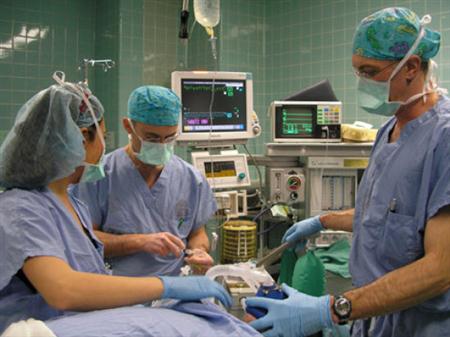
Awakening from anesthesia is often associated with an initial phase of delirious struggle before the full restoration of awareness and orientation to one’s surroundings. Scientists now know why this may occur: primitive consciousness emerges first.

The first atlas of the surface of the human brain based upon genetic information has been produced by a national team of scientists, led by researchers at the University of California, San Diego School of Medicine and the VA San Diego Healthcare System. The work is published in the journal Science.

Researchers help reveal complex role of genes in autism.

New research from scientists at the University of Milan considers the complications and new treatment challenges for elderly patients who suffer traumatic brain injury as a result of a fall.

Investigators from the University of Amsterdam, Netherlands, have shown that in most elderly patients invasive and expensive techniques, i.e. lumbar puncture and PET scan, are not useful to establish the diagnosis of Alzheimer’s disease.

Sleep plays a powerful role in preserving our memories. But while recent research shows that wakefulness may cloud memories of negative or traumatic events, a new study has found that wakefulness also degrades positive memories. Sleep, it seems, protects positive memories just as it does negative ones, and that has important implications for the treatment of post-traumatic stress disorder.

Neuroscience News

Is Angry Birds keeping your brain healthy?

A new study from the Archives of Neurology says playing brain stimulating games can improve your memory and delay or prevent the onset of Alzheimer’s disease.

A new study suggests hearing metaphors can activate brain regions involved in sensory experience.

Whether you are an athlete, a musician or a stroke patient learning to walk again, practice can make perfect, but more practice may make you more efficient, according to a surprising new University of Colorado Boulder study.

Researchers have found a way to study how our brains assess the behavior – and likely future actions – of others during competitive social interactions. Their study, described in a paper in the Proceedings of the National Academy of Sciences, is the first to use a computational approach to tease out differing patterns of brain activity during these interactions, the researchers report.

A molecular path from our body’s internal clock to cells controlling rest and activity have been revealed.

A new study looks at how our brain processes visual information to prevent collisions.

Can Brain Scans of Young Children Predict Reading Problems?  Brain scientists are studying whether they can predict which young children may struggle with reading, in order to provide early help.

Virtual therapists being developed to treat depression. Scientists at a U.S. university are developing new technologies to treat depression and other disorders — including a mood-detecting smart phone that will call to check up on you.

A new study shows how to boost the power of pain relief without drugs.

Neuroscience could change the face of warfare. Soldiers could have their minds plugged directly into weapons systems, undergo brain scans during recruitment and take courses of neural stimulation to boost their learning, if the armed forces embrace the latest developments in neuroscience to hone the performance of their troops

Brain activity differs when one plays against others. Researchers have found a way to study how our brains assess the behavior – and likely future actions – of others during competitive social interactions. Their study, described in a paper in the Proceedings of the National Academy of Sciences, is the first to use a computational approach to tease out differing patterns of brain activity during these interactions, the researchers report.

Reporting in PLoS Biology, researchers write that they were able to correlate words a person was hearing to specific electrical activity in the brain. Neuroscientist Robert Knight, a co-author of the study, discusses future applications of this research and concerns that it amounts to mental wiretapping.

Brains may be wired for addiction.  Abnormalities in the brain may make some people more likely to become drug addicts, according to scientists at the University of Cambridge.

Patients’ Brains May Adapt to ADHD Medication. New research reveals how the brain appears to adapt to compensate for the effects of long-term ADHD medication, suggesting why ADHD medication is more effective short-term than it is long-term.

A two-year study of high school football players suggests that concussions are likely caused by many hits over time and not from a single blow to the head, as commonly believed.

Weekly Round Up: Brain Research

Scientists now have a better understanding of the way that stress impacts the brain. New research, published by Cell Press in the January 26 issue of the journal Neuron, reveals pioneering evidence for a new mechanism of stress adaptation and may eventually lead to a better understanding of why prolonged and repeated exposure to stress can lead to anxiety disorders and depression.

Men may be at higher risk of experiencing mild cognitive impairment (MCI), or the stage of mild memory loss that occurs between normal aging and dementia, than women, according to a study published in the January 25, 2012, online issue of Neurology®, the medical journal of the American Academy of Neurology.

Scientists have estimated for the first time the extent to which genes determine changes in intelligence across the human life course.

Researchers at the University of California, San Diego School of Medicine have created a new generation of fast-acting fluorescent dyes that optically highlight electrical activity in neuronal membranes. The work is published in this week’s online Early Edition of theProceedings of the National Academy of Science.

A new study led by researchers at the University of California, Berkeley, provides even more reason for people to read a book or do a puzzle, and to make such activities a lifetime habit. Brain scans revealed that people with no symptoms of Alzheimer’s who engaged in cognitively stimulating activities throughout their lives had fewer deposits of beta-amyloid, a destructive protein that is the hallmark of the disease.

Weekly Round-Up

Blogging may have psychological benefits for teens suffering from social anxiety, improving their self-esteem and helping them relate better to their friends, according to new research published by the American Psychological Association.

Scientists at The Scripps Research Institute have discovered that DNA stays too tightly wound in certain brain cells of schizophrenic subjects. The findings suggest that drugs already in development for other diseases might eventually offer hope as a treatment for schizophrenia and related conditions in the elderly.

Deep depression that fails to respond to any other form of therapy can be moderated or reversed by stimulation of areas deep inside the brain.

Radiology researchers at The University of Texas Health Science Center at Houston (UTHealth) have found evidence that multiple sclerosis affects an area of the brain that controls cognitive, sensory and motor functioning apart from the disabling damage caused by the disease’s visible lesions.

People with diets high in several vitamins or in omega 3 fatty acids are less likely to have the brain shrinkage associated with Alzheimer’s disease than people whose diets are not high in those nutrients, according to a new study published in the December 28, 2011, online issue of Neurology®, the medical journal of the American Academy of Neurology.

When you experience a new event, your brain encodes a memory of it by altering the connections between neurons. This requires turning on many genes in those neurons. Now, MIT neuroscientists have identified what may be a master gene that controls this complex process. The findings, described in the Dec. 23 issue of Science, not only reveal some of the molecular underpinnings of memory formation — they may also help neuroscientists pinpoint the exact locations of memories in the brain.

Weekly Round Up

Image Source: The Dana Foundation

Our senses of sight and hearing work closely together, perhaps more than people realize, a new UCLA psychology study shows.

A team of neurobiologists  has shown for the first time that cortex, the largest area of the brain that is typically associated with higher functions such as perception and cognition, is also a prominent site of emotional learning.

Tiny electric currents applied across regions of the brain can improve hand movements in recovering stroke patients for a short period, an Oxford University study has demonstrated.

For the first time, scientists have proven that cannabis harms the brain. But the same study challenges previously-held assumptions about use of the drug, showing that some brain irregularities predate drug use.

How might keeping patients awake during surgery lead to the more successful removal of brain tumours? James Keidel, in his shortlisted entry for the 2011 Wellcome Trust Science Writing Prize, explains.

Researchers from the University of Bristol have discovered that a chemical compound in the brain can weaken the synaptic connections between neurons in a region of the brain important for the formation of long-term memories. The findings, published in the Journal of Neuroscience, may also provide a potential explanation for the loss of memory associated with Alzheimer’s.