Weekly Neuroscience Update

Credit: Frontiers in Human Neuroscience (2024). 

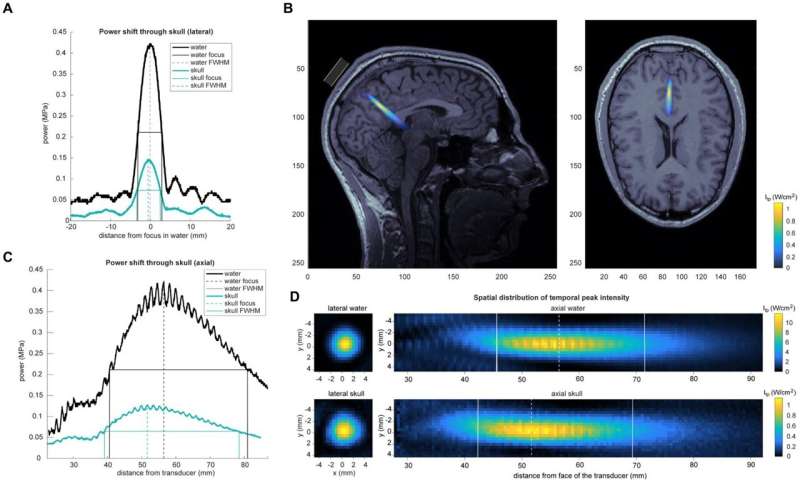
In a new study published in Frontiers in Human Neuroscience, researchers used low-intensity ultrasound technology to noninvasively alter a brain region associated with activities such as daydreaming, recalling memories and envisioning the future. They found that the technique can ultimately enhance mindfulness, marking a major advancement in the field of neuroscience.

New research finds that semaglutide, known as Ozempic/Wegovy, does not negatively impact brain health and may reduce cognitive problems and nicotine dependence.

Exposure to parental smoking (ParS) is associated with an increased risk for multiple sclerosis (MS) in later life in certain populations, according to a study presented at EAN 2024, the 10th Congress of the European Academy of Neurology, held from June 29 to July 2 in Helsinki.

Researchers have identified a new mutation in the ARPP21 gene linked to ALS. This discovery could improve ALS diagnosis and open avenues for personalized therapies. 

A new approach to improving uncertainty estimates in machine-learning models enhances prediction accuracy. The method uses the minimum description length principle to provide more reliable confidence measures for AI decisions, which is crucial in high-stakes settings like healthcare.

A recent study suggests that consciousness evolved not for individual survival, but for social purposes, helping humans communicate ideas and emotions. 

Researchers have discovered a neural activity pattern that can accurately predict and monitor the clinical status of OCD patients undergoing deep brain stimulation (DBS). This study highlights how this biomarker can guide DBS therapy, improving treatment outcomes for those with severe, treatment-resistant OCD.

New research could transform how we understand the way opioids affect the brain. 

A new study has found how the protein CGRP affects the brain’s lymphatic system, contributing to migraine pain. Their study reveals that CGRP prevents cerebrospinal fluid from draining, influencing migraine attacks.

Researchers have developed a neural network that mimics human decision-making by incorporating elements of uncertainty and evidence accumulation. 

Research published in Science Advances shows neurobiological underpinnings of sex and gender in children to better understand how sex (assigned at birth) and gender (identity and expression) influence the brain, and ultimately a person’s health.

A new study shows that by age three, children can understand others’ intentions using active mirror neurons.

For the first time, scientists have found that sleep can be detected by patterns of neuronal activity just milliseconds long, 1,000 times shorter than a second, revealing a new way to study and understand the basic brain wave patterns that govern consciousness. They also show that small regions of the brain can momentarily “flicker” awake while the rest of the brain remains asleep, and vice versa from wake to sleep.

A neuroimaging study of young people who exhibit a persistent pattern of disruptive, aggressive, and antisocial behavior, known as conduct disorder, has revealed extensive changes in brain structure.

Retired rugby players who have suffered multiple concussions have higher levels of certain proteins in their blood, which may make them more prone to developing diseases such as motor neuron disease (MND), according to a new study.

Researchers have used machine learning to define three subtypes of Parkinson’s disease based on the pace at which the disease progresses.

A new study reveals that psilocybin, the active compound in magic mushrooms, temporarily disrupts brain networks involved in introspective thinking, like daydreaming and memory. These changes persist for weeks, potentially making the brain more flexible and improving mental health. The findings could pave the way for psilocybin-based therapies for depression and PTSD. The research underscores the importance of using these drugs under medical supervision.

Scientists have established new criteria for a memory-loss syndrome in older adults that specifically impacts the brain’s limbic system.

A recent study links sleep preferences to brain performance, finding that “night owls” often score higher on cognitive tests than “morning larks.” Researchers analyzed data from over 26,000 people, highlighting that sleeping 7-9 hours a night optimizes brain function.

Finally this week, new research has demonstrated that activation of the brain’s reward system could boost recovery from a heart attack. 

Weekly Neuroscience Update

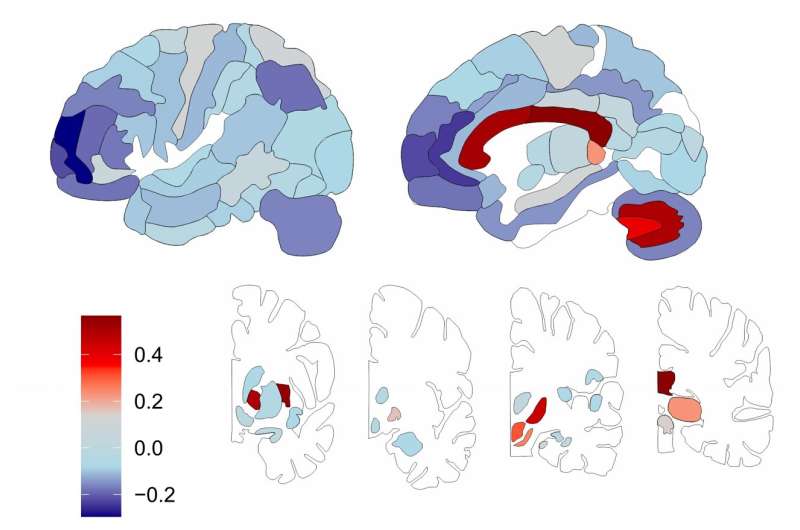
Distribution of cholesterol in the human brain. Credit: Maria Osetrova

Scientists have found that 93% of the lipids in brain tissue are distributed differently in the white and gray matter, the subcortex, the visual and motor cortices, and the prefrontal cortex, which is responsible for decision-making, social behavior, and other functions.

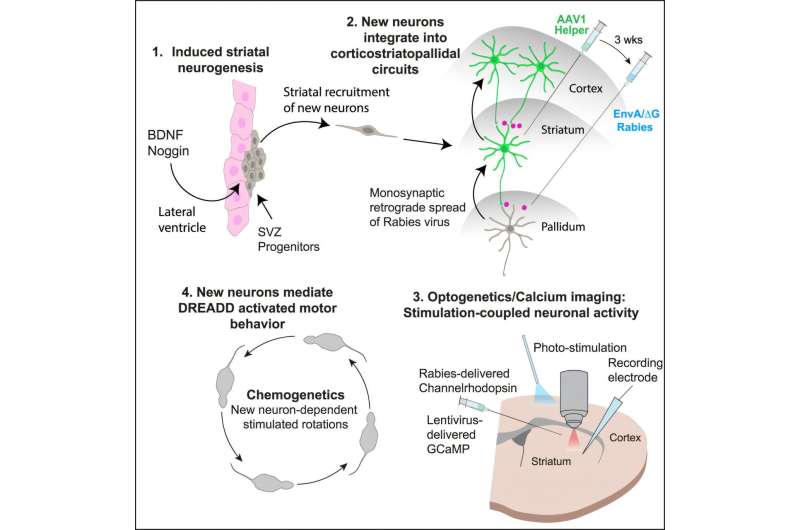
Researchers have shown how glial cells are reprogrammed into neurons via epigenetic modifications.

Young adults who have higher levels of inflammation, which is associated with obesity, physical inactivity, chronic illness, stress and smoking, may experience reduced cognitive function in midlife, a new study has found.

A paper recently published in Nature Communications advances our understanding of how the brain responds to emotionally charged objects and scenes.

A new study finds that higher inflammation in young adulthood is associated with reduced cognitive function in midlife. Inflammation due to factors like obesity and smoking can impact memory and processing speed. This link, previously noted in older adults, now extends to early adulthood, suggesting long-term brain health effects. Reducing inflammation through lifestyle changes may help prevent cognitive decline.

Researchers have discovered why migraines are often one-sided, revealing that proteins released during aura are carried to pain-signaling nerves via cerebrospinal fluid.

A recent study has pinpointed brain regions associated with mood fluctuations and pleasure responses in bipolar disorder. The findings revealed that people with bipolar disorder show heightened activity in the ventral striatum during rewards, explaining extreme mood shifts.

In groundbreaking research, scientists have determined the structure of molecules within a human brain affected by Alzheimer’s disease. 

A global research team has discovered a gene whose variants potentially cause neurodevelopmental disorders (NDDs) in hundreds of thousands of people across the world. The findings published in Nature, are an exciting first step towards the development of future treatments for the disorders which have devastating impacts on learning, behavior, speech, and movement.

A longitudinal study has found that high-intensity interval exercise improves brain function in older adults for up to five years.

A new research collaboration has harnessed a powerful machine learning model to predict concussion status in patients.

A new study shows that human biases in handedness and visual field processing have social and cognitive implications. Researchers found that people with a reversed bias (left hand, right visual) are more likely to have social difficulties and conditions like autism or ADHD.

A recent study sheds light on how the brain adapts hearing in different listening situations.

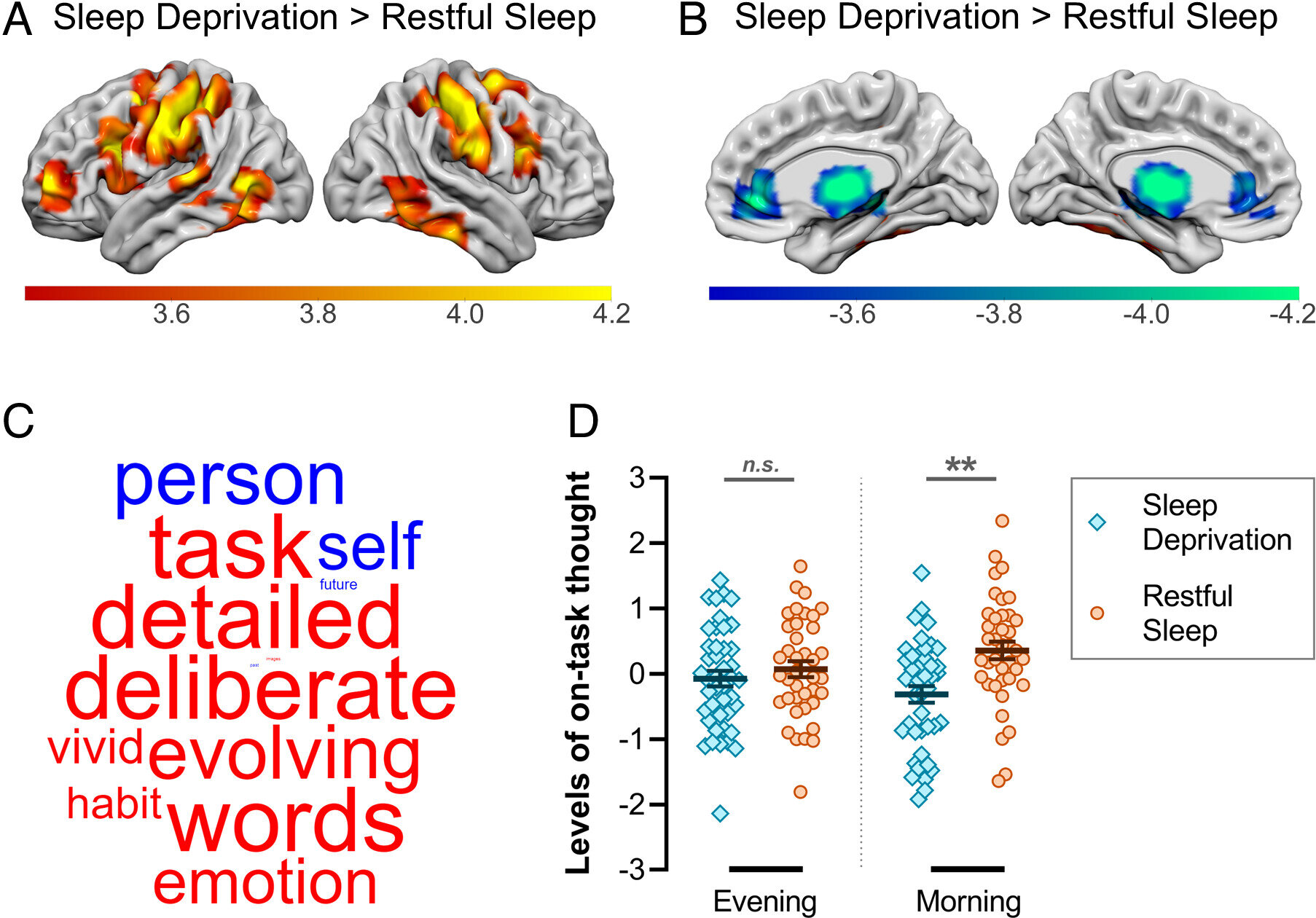
Finally this week, a study investigating the effect of sleep on brain performance has found a link between an individual’s preference for morning or evening activity and their brain function, suggesting that self-declared “night owls” generally tend to have higher cognitive scores.

Weekly Neuroscience Update

Reading Pleasure and Pain from the Brain

Functional brain networks that are connected to the affective intensity and valence information. Left: The affective valence information is connected to the limbic and default mode networks, and the affective intensity information is connected to the ventral attention network. Right: The probability that the affective intensity and valence is connected to each of seven functional brain networks. Credit: Proceedings of the National Academy of Sciences (2024).

A team of researchers has revealed how the brain processes emotional information of sustained pain and pleasure.

Scientists have uncovered the inner relay of a molecular switch that protects the brain against the development of Parkinson’s disease. The research provides new potential strategies to develop drugs that may benefit patients with Parkinson’s.

Brain-to-brain technology boosts brain-computer interface performance, a new study demonstrates.

Researchers have identified, for the first time, disease-specific reduction in emotional expressivity in Lewy body dementia by quantifying vocal expression of emotions using deep neural network techniques. This reduction in vocal emotional expressions was associated with cognitive impairment and specific brain region atrophy and could serve as a distinguishing factor for individuals with Lewy body dementia.

A new study finds the timing of brain waves shapes the words we hear.

New research has given a precise picture of young children’s developing brains, using a wearable brain scanner to map electrical brain activity. The work opens up new possibilities for tracking how critical developmental milestones, like walking and talking, are underpinned by changing brain function, and how neurodevelopmental conditions like autism emerge.

A new AI technique can identify seizure types, including rare forms of epilepsy.

A new study reveals that a poor quality diet may lead to brain changes associated with depression and anxiety. Researchers found that unhealthy eating habits reduce grey matter and alter neurotransmitter levels in the brain.

Research sheds new light on the contribution of dopamine to reinforcement learning.

A new study uncovered neural mechanisms used in planning, revealing an interplay between the prefrontal cortex and hippocampus. The study shows how the brain imagines future outcomes to guide decisions.

Losing the ability to smell properly—a common sensory deficit as people age—may help predict or even contribute to the development of heart failure, new research suggests.

A new study reveals that the main psychoactive component in cannabis or marijuana disrupts the normal connections and activity of the brain’s prefrontal cortex, a region that is crucial for decision-making and self-control.

Finally this week, people tend to underutilize their visual working memory rather than maxing out its capabilities according to new research.