Weekly Neuroscience Update

Credit: Neuroscience (2025). DOI: 10.1016/j.neuroscience.2025.06.032

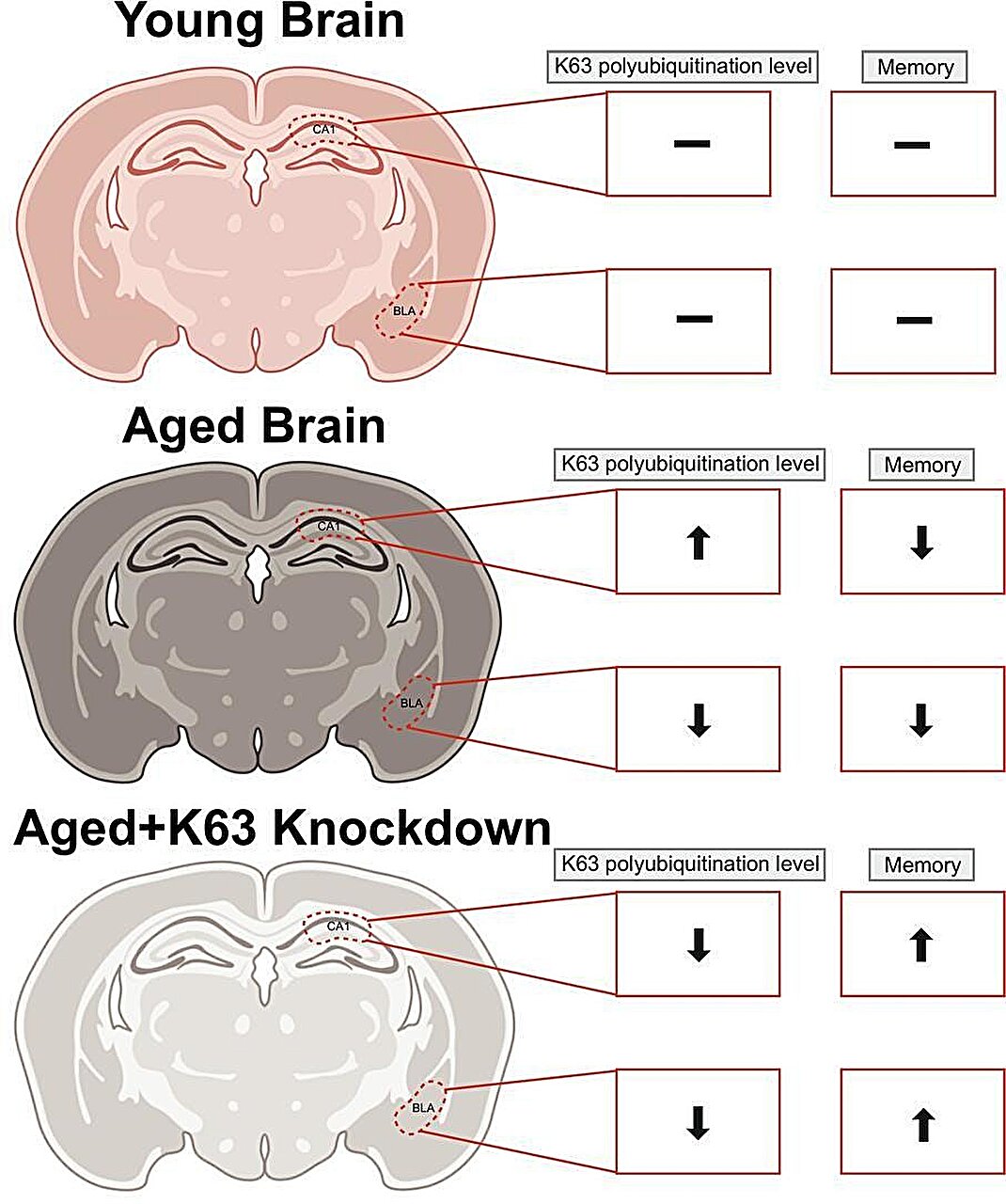
Memory loss may not simply be a symptom of getting older. New research shows that it’s tied to specific molecular changes in the brain and that adjusting those processes can improve memory.

An international consortium of researchers has created the largest-ever database compiling records of brain activity during sleep and dream reports. One of the first analyses of the database confirmed that dreams do not occur only during REM sleep, but also during deeper and calmer NREM stages. In these cases, brain activity resembles wakefulness more than deep sleep, as if the brain were “partially awake.”

A smartphone app for muscle relaxation significantly reduced migraine-related disability in patients visiting the emergency department.

A new study reveals that sleep-like slow-wave brain activity can persist for years in surgically disconnected brain hemispheres of awake epilepsy patients. Using EEG recordings, researchers found that the isolated cortex exhibits patterns similar to deep sleep, anesthesia, or vegetative states—suggesting absent or reduced awareness.

People 60 and older who are excessively sleepy during the day may have more problems with memory and thinking after surgery, suggests a study presented at the ANESTHESIOLOGY 2025 annual meeting.

Doctors and researchers at the University of Pittsburgh and UPMC have developed a new treatment for epilepsy patients who don’t respond to medication and aren’t candidates for surgery. Their approach, published in Nature Communications, uses deep brain stimulation (DBS) that is tailored to each patient’s unique brain wiring. 

A new computational tool has uncovered genetic evidence directly linking Alzheimer’s disease to the loss of memory-making neurons, helping to resolve a decades-long mystery in dementia research.

While studies have linked brain areas to remembering personal experiences, brain areas involved in learning more impersonal information about the world remain unclear. In a new JNeurosci paper, researchers used fMRI on 29 human volunteers as they performed a learning task to shed light on how the brain acquires semantic, impersonal information.

Researchers have traced the earliest stages of multiple sclerosis (MS), showing that the immune system begins attacking the brain up to seven years before diagnosis.

New research has provided the strongest evidence yet that auditory verbal hallucinations—or hearing voices—in schizophrenia may stem from a disruption in the brain’s ability to recognise its own inner voice.

Adults with gum disease may be more likely to have signs of damage to the brain’s white matter than people without gum disease, according to a study published in Neurology Open Access.

A team of researchers has developed and tested a new virtual reality (VR) training task designed to help stroke survivors living with visuospatial neglect (VSN), a disabling condition that affects attention and awareness of one side of space. The exploratory case study is among the first to integrate audiovisual cues within a physiotherapy-based VR task to support rehabilitation.

Finally, this week, listening to music when you are over 70 years of age has been linked to a 39% reduction in the risk of dementia, according to a new study of over 10,800 older people.
Weekly Neuroscience Update

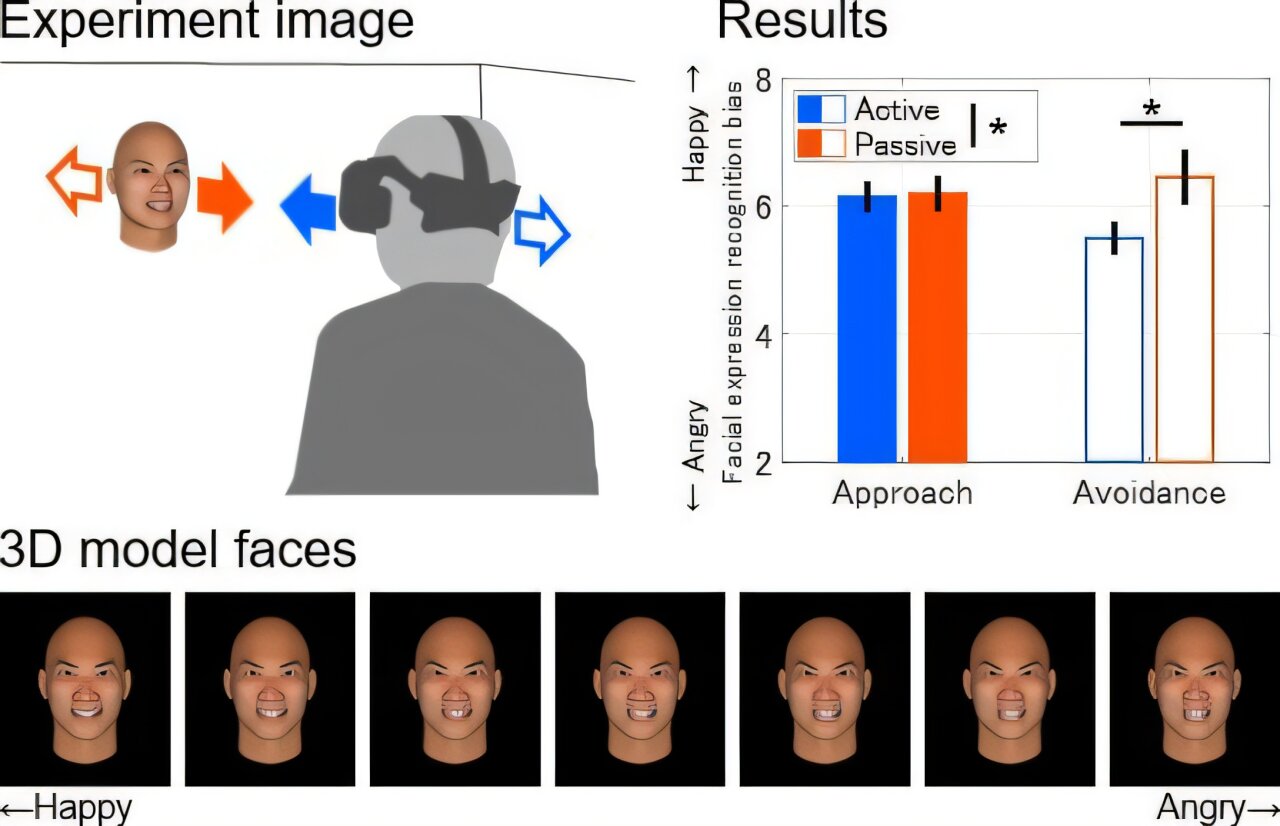
Participants were more likely to perceive the avatar’s expression as angry when they actively avoided the avatar, compared to when the avatar moved away from them. Credit: (C)Toyohashi University Of Technology.

A research team from the Cognitive Neurotechnology Unit and the Visual Perception and Cognition Laboratory at Toyohashi University of Technology has found that approach–avoidance behavior in a virtual reality (VR) environment modulates how individuals recognize facial expressions.

A McGill University-led clinical trial is the first in humans to show online brain training exercises can improve brain networks affecting learning and memory.

A new study reveals that the human brain synchronizes more accurately with rhythm when listening to music than when feeling it through touch. When people tap along to sound, slow rhythmic brain waves align with the perceived beat, helping maintain steady timing.

Psilocybin could be the future of mental health care, with promising findings emerging from Australia’s first research trial using psychedelics to treat depression.

An international research team led by a University of Ottawa Faculty of Medicine investigator has revealed intricate details about how nerve signals activate at the neuromuscular junction. This specialized synapse connects motor neurons to skeletal muscle fibers.

A ‘digital twin’ of your brain could predict mental health issues and slow cognitive decline.

A study published in Environment International concludes that air pollution during pregnancy is associated with slower brain maturation in newborns. It is the first study to analyze brain development within the first month of life.

A new clinical trial is investigating how advanced brain monitoring could improve the diagnosis and management of epilepsy.

University of California San Diego of Medicine researchers, in collaboration with the genetic testing company 23andMe, have identified regions of the human genome associated with cannabis use, uncovering new relationships with psychiatric, cognitive and physical health.

The conditions where you live may influence your brain health and risk for dementia, according to a new study.

Women are affected by severe depression twice as often as men. The reasons for this have not yet been fully clarified. One potential factor is sex-specific differences in the blood-brain barrier. Scientists are conducting research on the project “Leaky blood-brain barrier in major depressive disorder.” A particular focus is on sex-specific differences.

New research reveals how uniquely wired human brains can perceive the world in strikingly similar ways.

A new study published in Scientific Reports indicates that amyotrophic lateral sclerosis (ALS) and multiple sclerosis (MS) have an extremely high geographic association, even after controlling for race, gender, wealth, latitude, and access to neurological health care.

Finally, this week, a ‘ flight simulator‘ for the brain reveals how we learn—and why minds sometimes go off course.

Weekly Neuroscience Update

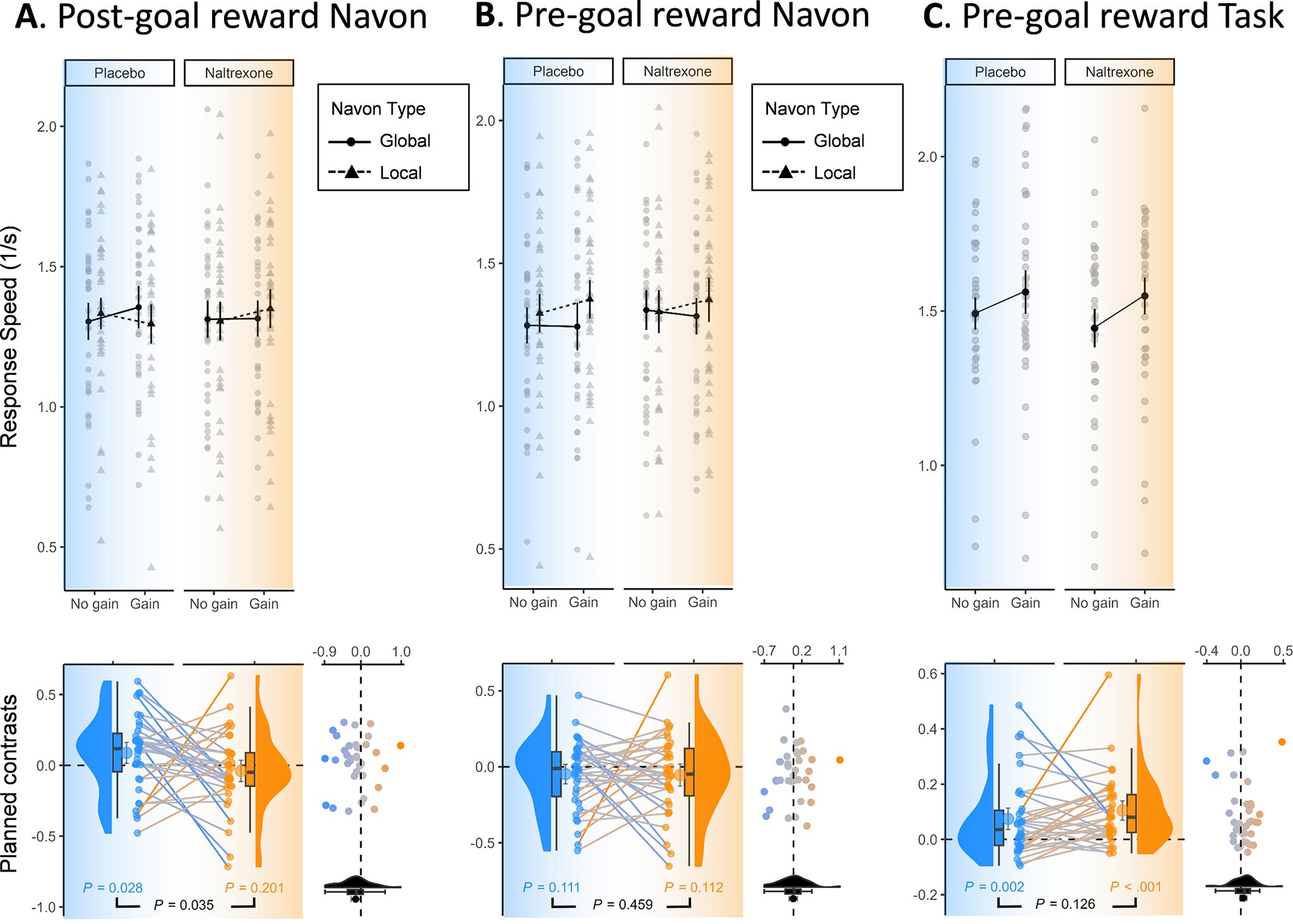
Opioid blockade (Naltrexone condition; right side) relative to placebo (Control condition; left side) selectively eliminated attentional broadening after reward receipt (A), but did not change attentional narrowing after reward anticipation (B) or reward-related performance speed on the lexical decision task (C). Credit: Psychological Medicine (2025). 

Feeling good doesn’t just lift our mood—it also helps us stay flexible and resilient. A study by an international team of neuroscientists shows that natural brain opioids released after rewards play a key role in broadening attention, offering fresh insights into stress, cognition, and well-being.

A ground-breaking study has shown that ALS may actually be an autoimmune disease.

Engaging in creative experiences, such as music, dance, visual arts, and even specific video games, can slow brain aging and promote healthier brain function, according to a new international study by the Global Brain Health Institute (GBHI), published in Nature Communications.

Can your brain attune itself to a foreign language before you’re born? A team of neuropsychology researchers has found that it can.

A new study reveals that the brain’s social perception pathway—a network that processes faces, gaze, and speech—is already active at birth or shortly thereafter. Using advanced imaging data, researchers showed that newborns exhibit robust connectivity in regions responsible for visual and social processing.

Scientists have discovered why mental maps tend to fade with age.

A new study has identified five distinct “sleep-biopsychosocial” profiles that connect how we sleep with our brain networks, mental health, cognition, and lifestyle. Using data from over 700 participants, researchers found that different sleep patterns—ranging from poor quality to resilience and short duration—each showed unique neural connectivity patterns.

A large-scale international study has revealed that autism diagnosed in early childhood is genetically and developmentally distinct from autism diagnosed later in life.

Scientists have developed a new mathematical model of memory that explores how information is encoded and stored. Their analysis suggests that memory works best in a seven-dimensional conceptual space — equivalent to having seven senses. The finding implies that both humans and AI might benefit from broader sensory inputs to optimize learning and recall.

Researchers have identified a rare type of brain cell that may drive the chronic inflammation and neurodegeneration seen in progressive multiple sclerosis (MS). 

A new study shows that bullying activates distress pathways in the brain within seconds. Tweens and adults who viewed first-person bullying videos displayed heightened activity in social and emotional brain networks, alongside strong autonomic threat responses.

New research sheds light on the mechanisms by which humans can isolate and focus on individual sounds in noisy environments.

Scientists have revealed that intentional memory control—deciding what to remember or forget—is more potent than emotional influence when forming long-term memories. Participants were more likely to recall words they were told to remember than those carrying emotional weight, even though emotion sometimes strengthened recall or caused false memories.

Finally, this week, a new study reveals how the brain organizes and directs its slowest activity.

Weekly Neuroscience Update

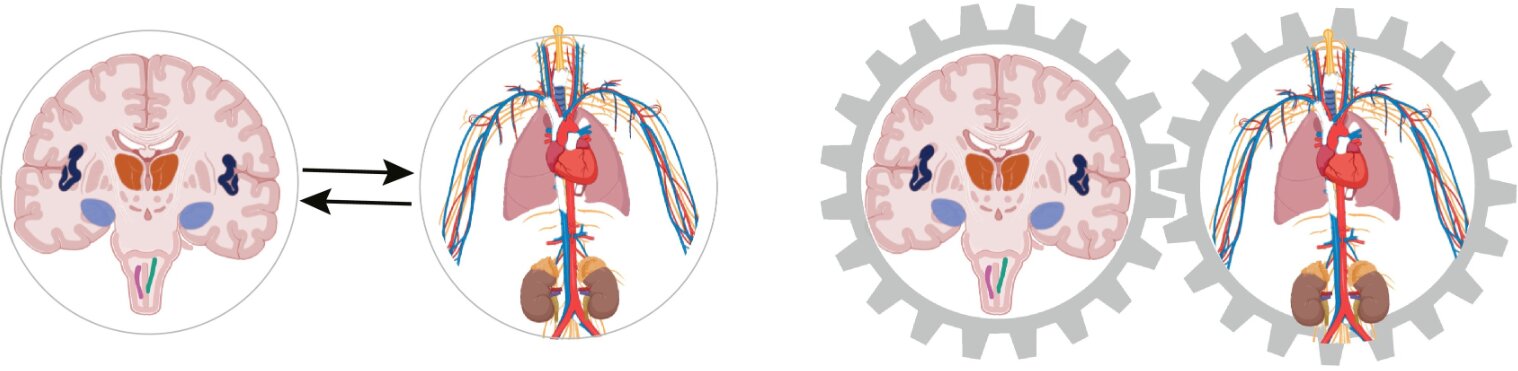
Conceptual framework for brain–body states. Credit: Trends in Neurosciences (2025). 

There is growing evidence that the heart has a strong influence on thinking and feeling.

Your chronological age may say 65, but your brain could be acting a decade younger — or older — depending on your life experiences. That’s the message from a study by University of Florida researchers, who found that optimism, good sleep, social support, and other positive factors were strongly linked with healthier brains. The findings suggest that how people live and cope with stress can measurably influence the pace of brain aging, even in those living with chronic pain.

An international research team has made a significant breakthrough in predicting neurodegenerative diseases.

In a discovery that could reshape our understanding of memory, neuroscientists have found that forgetting is not just a glitch in the brain but is actually a finely tuned process, and dopamine plays a crucial role.

A new study shows that lifelong social advantages can slow biological aging.

Recent research explores the ways brain cells communicate, revealing fresh insight into the progression of Alzheimer’s disease. A multidisciplinary team used advanced imaging and computational modeling to analyze the “crosstalk” between neurons and their supporting glial cells in the human brain. This approach highlights the brain’s interconnected cellular network.

A growing number of U.S. adults—particularly those under 40—are reporting serious challenges with memory, concentration and decision-making, according to a new study published in Neurology.

Researchers at the University of Michigan are using artificial intelligence to predict the health consequences that sport-related concussions might have on student athletes over the course of their college athletic careers.

A recent study shows that sugary drinks don’t just affect physical health—they may also raise the risk of depression in women by disrupting the gut microbiome.

New research has shown that walking enhances how the brain processes auditory information, sharpening responses compared to standing still. When participants walked in a figure-eight path, their brains responded more strongly to sounds, and turning direction influenced whether responses were enhanced or suppressed in each ear.

Extreme instances of stress can cause lasting changes to the brain itself. This could leave some people more vulnerable to addiction, a University of Mississippi study concludes.

People who sleep poorly are more likely than others to have brains that appear older than they actually are. This is according to a comprehensive brain imaging study from Karolinska Institutet, published in the journal eBioMedicine.

An advanced AI tool can detect tiny brain lesions that cause severe epilepsy in children, allowing faster diagnosis, more precise treatment and a potential cure.

New research has found that people with narcolepsy type 1 exhibit patterns of slow brain pulsations that resemble those seen in healthy sleep. The findings, published in PNAS, suggest that orexin—a neuropeptide involved in maintaining wakefulness—may play a key role in the brain’s fluid-clearing system, known as the glymphatic system.

Finally this week, scientists have developed a brain-inspired semiconductor that can adjust its responses based on experience, much like human neurons do through “intrinsic plasticity.”