
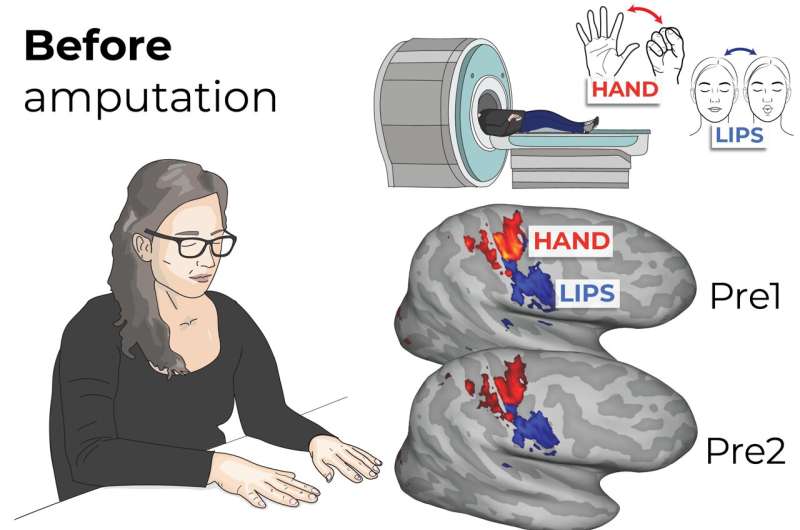
The brain holds a “map” of the body that remains unchanged even after a limb has been amputated, contrary to the prevailing view that it rearranges itself to compensate for the loss, according to new research.
A fading sense of smell can be one of the earliest signs of Alzheimer’s disease even before cognitive impairments manifest.
Scientists have developed a computational framework that maps how the striosomal compartment of the striatum governs everyday decision-making. By integrating biology, decision theory, and mathematical modeling, different levels of striosomal activity can push individuals toward impulsive, balanced, or overly complex decisions.
A recent study has shown that the brain leaves subtle traces of creativity minutes before an “aha!” moment.
New research has raised concerns about the safety of acetaminophen use during pregnancy, linking prenatal exposure to higher risks of autism and ADHD. While the evidence does not prove causation, it highlights biological mechanisms such as oxidative stress and hormone disruption that may affect fetal brain development. Researchers recommend cautious, time-limited use under medical supervision and call for safer treatment alternatives.
A new study has found that people who lived in areas with high levels of leaded gasoline emissions in the 1960s and ’70s are more likely to report memory problems today.
A multi-institution research team reports that gaze patterns can serve as a sensitive marker of cognitive decline, with associated reductions in explorative, adaptive, and differentiated visual sampling of the environment.
New research reveals that different types of music shape the emotional tone of the memories they evoke.
A genetic study has identified more than 400 genes that drive different forms of unhealthy aging, from cognitive decline to metabolic problems. The findings show that frailty is not a single condition but multiple subtypes with distinct biological pathways.
Finally, this week, a new study suggests the brain may be a missing link in certain forms of high blood pressure or hypertension.
 inside-the-brain.com