Weekly Neuroscience Update

Findings from a mega-analysis of differences in seed-based subcortico-cortical connectivity in youths with attention deficit hyperactivity disorder (ADHD) and unaffected control subjects. Credit: American Journal of Psychiatry (2024). 

Researchers have discovered that symptoms of attention-deficit/hyperactivity disorder (ADHD) are tied to atypical interactions between the brain’s frontal cortex and information-processing centers deep in the brain.

A new study has identified a genetic mutation underlying a rare form of epilepsy and reveals novel molecular and cellular mechanisms by which the disorder manifests in patients.

For the first time, researchers have shown that non-invasive brain stimulation can change a specific brain mechanism directly related to human behavior. This is a major step forward for discovering new therapies to treat brain disorders such as schizophrenia, depression, Alzheimer’s disease, and Parkinson’s disease.

A test that shows how good or bad we are at perceiving the rhythm of language can predict the ability to acquire language, and may also help us understand individual differences in brain biology.

A new study reveals the mechanisms behind proprioception, our body’s innate ability to sense limb position and movement, critical for movement without visual cues. Utilizing musculoskeletal simulations and neural network models, researchers have advanced our understanding of how the brain integrates sensory data from muscle spindles to perceive bodily position and motion.

Specialized brain scans may accurately predict whether a psychotic patient will go on to develop treatment-resistant schizophrenia, Dutch researchers report.

Researchers have uncovered a significant correlation between social isolation and accelerated biological aging, indicating that individuals with limited social connections are at a higher risk of premature mortality.

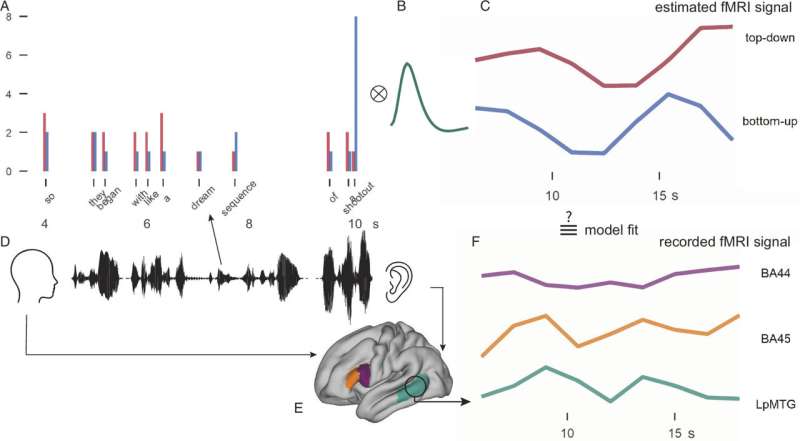
Scientists have revealed new insights into how the brain processes speech and listening during conversations through advanced investigations using functional magnetic resonance imaging (fMRI).

A unique multicenter study, including about 3,500 youth between 10 and 25 years old from across the globe, shows that artificial intelligence—specifically machine learning—can identify individuals with anxiety disorders based on their unique brain structure.

Researchers have identified four distinct sleep patterns linked to long-term health outcomes, revealing the profound impact of sleep habits on chronic health conditions.

A new study uncovers the nuanced effects of spaced learning on memory, emphasizing the importance of the content’s variability and the intervals between learning sessions. The study contrasts the impact of learning identical content versus content with variations, across different timescales, on memory retention.

Finally, this week, spending quality time with dogs reduces stress and increases the power of brain waves associated with relaxation and concentration, according to a recent study.
Weekly Neuroscience Update

Graphical representation of the analysis procedure to relate word-by-word predictors of linguistic complexity to BOLD activity. Credit: Proceedings of the National Academy of Sciences (2024). 

How does the brain respond to sentence structure as we speak and listen? In a neuroimaging study published in PNAS, researchers investigated sentence processing during spontaneous speech for the first time.

A research team has achieved a breakthrough in stem cell research, offering tools that can be used for patients who require highly personalized care.

Researchers demonstrated promising results for PTSD treatment in military veterans by combining brain stimulation with virtual reality exposure therapy. The clinical trial showed significant reductions in PTSD symptoms among participants who received low electrical current brain stimulation during virtual reality sessions designed to simulate warzone experiences.

A new study involving participants from 15 countries, shed light on the universal preference for simple integer ratios in rhythms, revealing significant cultural variations in musical perception.

Researchers have uncovered a strikingly similar suite of changes in gene activity in brain tissue from people with schizophrenia and from older adults. These changes suggest a common biological basis for the cognitive impairment often seen in people with schizophrenia and in the elderly.

A new study reveals a direct correlation between adversities faced in childhood and adulthood with later psychiatric and cognitive decline.

A new study reveals a strong link between daytime physical activity and improved sleep quality among both children and adults. Analyzing the daily routines of over 2500 participants, the research highlights how higher levels of moderate to vigorous physical activity correlate with fewer sleep disturbances, less daytime tiredness, and overall better sleep quality.

In an innovative study published in Science Advances, researchers have unveiled new insights into the intricate relationship between emotion and perception.

Even people whose physical activity levels fall short of recommended guidelines, but who manage to do some during their leisure time, are likely to have a lower risk of stroke than their sedentary peers, suggests a pooled data analysis of the available evidence, published online in the Journal of Neurology, Neurosurgery & Psychiatry.

A recent study showcases a significant leap in the study of brain oscillations, particularly ripples, which are crucial for memory organization and are affected in disorders like epilepsy and Alzheimer’s. 

People who have headaches after experiencing concussions may also be more likely to have higher levels of iron in areas of the brain, which is a sign of injury to brain cells, according to a preliminary study that will be presented at the American Academy of Neurology’s 76th Annual Meeting taking place April 13–18, 2024.

The COVID-19 virus can persist in the blood and tissue of patients for more than a year after the acute phase of the illness has ended, according to new research.

Researchers identified sildenafil, known commercially as Viagra, as a promising candidate for treating Alzheimer’s disease. Leveraging artificial intelligence the team analyzed vast amounts of data, including insurance claims and brain cell observations, to highlight sildenafil’s potential benefits in reducing Alzheimer’s prevalence and neurotoxic proteins.

A new study provides some of the most detailed insights yet into the brain mechanisms that help people pay attention amid such distraction, as well as what’s happening when they can’t focus.

A new AI language model identifies clinical symptoms in medical summaries and links them to brain tissue from donors of the Netherlands Brain Bank. This yields new insights into the development of individual disease progression and contributes to a better understanding of common misdiagnoses of brain diseases. The model may, in the future, assist in making more accurate diagnoses.

Researchers have discovered a brain circuit that drives vocalization and ensures that you talk only when you breathe out, and stop talking when you breathe in.

For the first time, neuroscientists have established a link between shifts in our visual perception and the cadence of our steps while walking.

A new study examines the potential of artificial intelligence to shift chronic pain treatment from opioids to mindfulness-based stress reduction (MBSR). Utilizing machine learning to analyze extensive patient data, the study aims to predict which patients will benefit most from MBSR, a critical step toward personalized medicine.

Finally this week, new research reveals how the human brain processes vital signals from the heart and lungs, offering new insights into the complex brain-body integration essential for health and cognition.

Inside Your Amazing Brain: How Different Regions Got Their Names #BrainAwarenessWeek

The brain is a complex organ responsible for regulating various bodily functions, including movement, sensation, cognition, and emotion. It is divided into different regions, each with its own specific functions and structures. Over the years, scientists have named these parts of the brain based on their location, shape, or function. By understanding the names of these parts, scientists can better understand the role each plays in the overall function of the brain. In this post, we will explore some of the most common names of brain regions and how they got their names.

Hippocampus: A Seahorse in the Brain

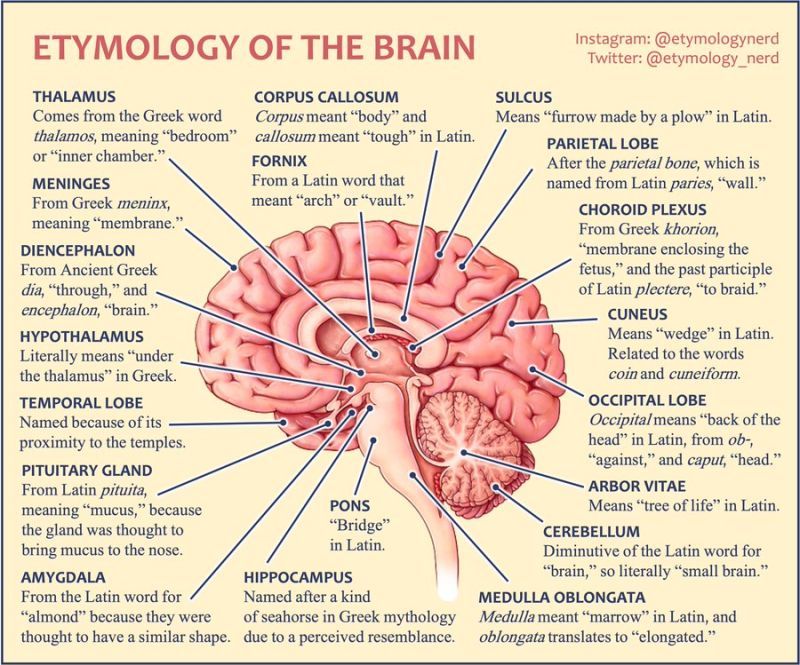
    The hippocampus, a crucial structure for memory and learning, derives its name from the ancient Greek word “hippos,” meaning horse, and “kampos,” meaning sea monster. The name is a nod to the structure’s curved shape, resembling that of a seahorse. This term was first coined by the renowned anatomist Julius Caesar Aranzi in the 16th century, who recognized the hippocampus’s distinctive appearance in the brain.

    Amygdala: The Almond-Shaped Emotion Center

    Nestled deep within the temporal lobe, the amygdala is responsible for processing emotions, particularly fear and pleasure. Its name is derived from the Latin word “amygdala,” which means almond. The term reflects the amygdala’s characteristic almond shape and was popularized by the anatomist Albrecht von Haller in the 18th century.

    Thalamus: The Inner Chamber

    The thalamus, a central relay station for sensory information, owes its name to the Greek word “thalamus,” meaning inner chamber or bed. This choice of nomenclature emphasizes the thalamus’s role in relaying sensory signals to different areas of the brain, acting as a gateway for information processing.

    Cerebellum: The Little Brain

    Sitting at the back of the skull, the cerebellum is involved in motor control and coordination. Its name, “cerebellum,” is a Latin diminutive form of “cerebrum,” meaning brain. The term highlights the cerebellum’s smaller size compared to the cerebral hemispheres while underscoring its critical role in fine-tuning motor movements.

    Frontal Lobe: The Foremost Part of the Brain

    The frontal lobe, responsible for executive functions such as decision-making and personality, gets its name from its location at the front of the cerebral cortex. The term “frontal” is derived from the Latin word “frons,” meaning forehead, emphasizing the anterior position of this brain region.

    Occipital Lobe: The Region at the Back of the Head

    As the name suggests, the occipital lobe is located at the rear of the cerebral cortex, playing a key role in visual processing. The term “occipital” is derived from the Latin word “occiput,” meaning back of the head. This naming convention reflects the lobe’s anatomical position and its primary function in vision.

    From the seahorse-shaped hippocampus to the almond-shaped amygdala, these structures’ names convey their physical characteristics and the curiosity of the scientists who explored the brain throughout history. Exploring the brain’s intricacies remains an ongoing and fascinating journey as our understanding of it advances.

    Weekly Neuroscience Update

    Synergetic framework. Credit: Trends in Cognitive Sciences

    A new model for understanding the brain paves the way for more accurate diagnoses and treatments.

    For people with drug-resistant epilepsy, having a dog companion trained in detecting seizures and other epilepsy-related tasks may reduce the amount of seizures they have, according to new research published in Neurology

    New research shows that continued cocaine use disrupts communication between major brain networks.

    Researchers are embarking on a pioneering study to uncover how genes associated with autism spectrum disorders (ASD) converge to affect brain neurons, particularly leading to heightened sound sensitivity. This research aims to identify common neural circuit mechanisms that may underlie the diverse genetic pathways contributing to ASD, focusing on auditory hypersensitivity, a condition that significantly impacts individuals’ lives.

    Two new studies explore how closely attention and eye movements are linked and reveal how the brain coordinates the two processes.

    A pioneering new study using virtual reality (VR) aims to identify early signs of Alzheimer’s disease through impaired spatial navigation in asymptomatic adults at risk. By testing 100 middle-aged adults with genetic, familial, or lifestyle risk factors for Alzheimer’s, the study discovered that spatial navigation difficulties in VR environments precede traditional cognitive decline symptoms. Notably, this impairment was more pronounced in men than women, suggesting a gender-specific vulnerability

    Mounting research shows that COVID-19 leaves its mark on the brain, including significant drops in IQ scores.

    A daily fiber supplement improved brain function in people over 60 in just 12 weeks. The study, published recently in Nature Communications showed that this simple and cheap addition to diet can improve performance in memory tests associated with early signs of Alzheimer’s disease.

    A new study has found mutations in key brain cells among individuals with chronic opioid use that could shift how we think about treatment strategies for opioid use disorder.

    According to a Mayo Clinic study published in Nature Neuroscience, the cells that act as the central nervous system’s first line of defense against harm also play a role in helping the brain awaken from anesthesia. This discovery could help pave the way for innovative methods that address post-anesthesia complications.

    Scientists have trained a bank of AI models to identify patterns of brain activity that signal memory formation.

    People who experience sleep apnea may be more likely to also have memory or thinking problems, according to a preliminary study that will be presented at the American Academy of Neurology’s 76th Annual Meeting taking place April 13–18, 2024.

    Schizophrenia is associated with an increased risk of subsequent cardiovascular disease events, with the association stronger in women, according to a new study.

    New research delves into the genetic underpinnings of language development in early childhood and its implications for later cognitive abilities and neurodevelopmental disorders such as Attention-Deficit/Hyperactivity Disorder (ADHD) and Autism Spectrum Disorder (ASD). Interestingly, the research highlights a developmental shift in the genetic associations with ADHD symptoms, suggesting that the role of genetics in language development and its impact on neurodevelopmental outcomes is complex and changes over time. This study underscores the importance of understanding the early linguistic journey as a window into a child’s future mental health and cognitive prowess.

    Finally this week, a new neuroimaging study is the first to reveal how the brain gets to the creative flow state.

    Weekly Neuroscience Update

    A cell membrane is illustrated to show the surface in red. Blue objects are proteins, including ion channels, which can send electrical impulses into cells. Lipids, or fats, are in yellow. In this cross section, an ion channel associates with a lipid raft. The function of the lipid structures is regulated by cholesterol. Mechanical force can deplete the cholesterol and release the ion channel, changing activity within the cell. Credit: Scott Hansen, Ph.D., The Wertheim UF Scripps Institute

    New research shows how physical pressure on cells can reduce pain signals, while excessive cholesterol clumps in cell membranes can interfere with that process.

    Researchers have advanced our understanding of the neuronal basis of spatial memory. Their research reveals that during spatial memory tasks, different types of nerve cells activate in unison, coordinated by brain waves known as “ripples.”

    Researchers have unveiled a pioneering technology capable of real-time human emotion recognition, promising transformative applications in wearable devices and digital services.

    Children who lived in areas with higher levels of airborne lead in their first five years of life appeared to have slightly lower IQs and less self-control, with boys showing more sensitivity to lead exposure, according to a new study.

    New research challenges the conventional picture of Parkinson’s disease.

    A neurotransmitter previously thought only to calm neurons may also play a role in waking them up, according to a study published in the journal PLOS Biology, a discovery that challenges the textbook view of how neurons communicate with one another in the brain.

    Researchers have achieved a breakthrough in mapping the brain’s ‘dysfunctome’—key dysfunctional circuits linked to disorders like Parkinson’s, dystonia, OCD, and Tourette’s syndrome.

    Scientists have delved into the world of chemical neuromodulators in the human brain, specifically dopamine and serotonin, to reveal their role in social behavior. The study revealed a previously unknown neurochemical mechanism for a well-known human tendency to make decisions based on social context—people are more likely to accept offers from computers while rejecting identical offers from human players.

    New research identifies nerve endings that shed light on gut-brain communication.

    Live music significantly amplifies emotional responses in the brain compared to recorded tunes. By measuring amygdala activity, researchers found that live performances evoke stronger emotional reactions, fostering a deeper cognitive and affective processing throughout the brain.

    A new study reveals that oxygenation levels in the placenta during the last trimester of pregnancy are a key predictor of the development of the cerebral cortex and likely childhood cognition and behavior.

    Blood vessels that cross-connect adjacent arterial trees regulate blood flow to the brain in stroke patients. Researchers have now shown that these vessels prevent brain hemorrhage following treatment to remove blood clots.

    Researchers have developed a simulator that enables artificial visual observations for research into the visual prosthesis.

    A cross-cultural study has revealed that music universally influences bodily sensations and emotions, transcending cultural boundaries. Researchers from Western and East Asian backgrounds discovered that emotional and structural characteristics of music consistently evoke similar bodily sensations—such as changes in the chest, limbs, and head regions—regardless of cultural background.

    A new study finds concussions alter connectivity among brain regions.

    New research has unveiled a crucial role of sleep: brainwaves facilitate the cleansing of the brain by flushing out waste. This discovery not only underscores the brain’s non-dormant state during sleep but also highlights a sophisticated system where neurons’ synchronized activity powers the flow of cerebrospinal fluid, effectively removing metabolic waste and potentially neurodegenerative disease-causing toxins.

    Finally this week, COVID-19 may have an impact on people’s cognitive and memory abilities that lasts a year or more after infection, according to a new study by Imperial College London researchers.