Pawan Sinha, a Professor of Vision and Computational Neuroscience at Massachusetts Institute of Technology, whose work spans experimental and computational approaches to studying human visual cognition. In this video Professor Sinha details his groundbreaking research into how the brain’s visual system develops. Sinha and his team provide free vision-restoring treatment to children born blind, and then study how their brains learn to interpret visual data. The work offers insights into neuroscience, engineering and even autism
Month: September 2013
Weekly Neuroscience Update

Yusnier Viera
A new study of the brain of a maths supremo supports Darwin’s belief that intellectual excellence is largely due to “zeal and hard work” rather than inherent ability. University of Sussex neuroscientists took fMRI scans of champion ‘mental calculator’ Yusnier Viera during arithmetical tasks that were either familiar or unfamiliar to him and found that his brain did not behave in an extraordinary or unusual ways.
A fear memory was reduced in people by exposing them to the memory over and over again while they slept. It’s the first time that emotional memory has been manipulated in humans during sleep, report Northwestern Medicine scientists.
Massachusetts General Hospital (MGH) researchers have identified and validated two rare gene mutations that appear to cause the common form of Alzheimer’s disease (AD) that strikes after the age of 60.
Moderate reductions in body temperature can improve outcomes after a person suffers a traumatic brain injury (TBI).
When individuals with psychopathy imagine others in pain, brain areas necessary for feeling empathy and concern for others fail to become active and be connected to other important regions involved in affective processing and decision-making, reports a study published in the open-access journal Frontiers in Human Neuroscience.
Research from Virginia Tech suggests that with advances in neurofeedback techniques, the signal-to-noise ratio of the brain activity underlying our thoughts can be “remastered.”
In a landmark discovery, the final piece in the puzzle of understanding how the brain circuitry vital to normal fertility in humans and other mammals operates has been put together by researchers at New Zealand’s University of Otago.
Brain regions associated with memory shrink as adults age, and this size decrease is more pronounced in those who go on to develop neurodegenerative disease, reports a new study published Sept. 18 in the Journal of Neuroscience . The volume reduction is linked with an overall decline in cognitive ability and with increased genetic risk for Alzheimer’s disease, the authors say.
Scientists say that people who have a certain abnormality in their brain structure are more likely to develop chronic pain following a lower back injury, according to a study published in the journal Pain.
The development of fine motor control – the ability to use your fingertips to manipulate objects – takes longer than previously believed, and isn’t entirely the result of brain development, according to a pair of complementary studies.
What can mirror neurons teach us about consciousness, mental health and well-being?

The study of mirror neurons is converging to unite the emerging scientific study of consciousness with the field of cybernetics, to bridge the gap between the mechanistic models of brain function, with the knowledge of ourselves as a lot more than just our brains.
Mind and brain
Human beings cannot be defined by their physical body or brain alone – just as electricity cannot be defined by the nerves through which it travels. The human brain is in fact, a system in constant flux. This distinction between the brain and the mind – that man is not a machine but has and uses a machine – the brain – is critical in our understanding of how we as humans learn and evolve.
Brain inputs and outputs

This illustration shows that different circuits are called upon in the brain for gathering information from the world around us (i.e. input from the five senses) and for acting on the world (output though thought and action).
We are more than just our brain circuits
In this way the human brain is a system that takes in sensory data to create new nerve connections that are to be used in interactions with the external world. Feedback from the external environment, in turn, is used to enhance subsequent communications with it. This can be described in cybernetic terms as a ‘virtuous loop’ of control, communication and feedback is the key feature of a servomechanism that needs to arrive at a preset goal. An understanding of consciousness is of particular interest to cybernetics which questions as to how psychological/cognitive functions are produced by brain circuits.
Mirror neurons which mirror neurons which mirror neurons, etc., = consciousness

In a provocative video Douglas Hofstadter argues that mirror neurons – cluster of neurons that help connect us emotionally to other people, respond sympathetically towards others and allow us to anticipate others intentions – have an additional function as part of an internal ‘vortex of control, communication and feedback’ that arrives at the preset goal that we call conscious self-awareness. He goes on to argue that the more self-referentially aware a mind is – the more it self-mirrors – i.e. the more conscious it becomes.
The cybernetics of happiness
Happiness is a matter of attention – of choice – and most important to the dynamic of happiness is – the what, the target/goal – rather than – the how, the path. The frontal lobes of the brain focus attention on what is to be learned while the subconscious mind in part located in a deeper brain structure called the midbrain delivers the drive to achieve it. The idea of focused attention together with the discovery of mirror neurons in the brain is radically altering our understanding of improving self-regulation by providing new opportunities to learn how brains pay attention in real world settings and acquire healthy habits to reduce or prevent needless suffering not only in others but also in ourselves.
Mental health and well-being
In his bestselling positive psychology book Learned Optimism: How to Change Your Mind and Your Life Martin Seligman insists that in order to protect yourself from being swamped by failure you must have a compelling goal, something that drives you forward. While this may sound obvious and not particularly insightful, goal-setting involves overcoming some very natural inclinations. When you have clear goals in mind defeat cannot be seen as permanent or in any way a reflection on you as a person. Most problems we have are temporary and external but too often failure is taken personally. This is why having a compelling goal is so important to mental health.
Choose your goals carefully
The choice of goal is also important as mental health and well-being is facilitated when people ‘self-mirror’ with noble, self-empowering goals involving kindness, generosity and courage. Too often in life people set goals such as the accumulation of wealth/possessions, status and/or the pursuit of pleasure only to find disappointment. Pleasure is of the senses and leads to emotional exhaustion while happiness is a by-product of focussed attention on a compelling and self-empowering goal.
It is important to develop the skill of goal setting and apply it to all aspects of your life.
In the end the happiest person is someone who has become their goals.
What Is Neuroplasticity?
Not so long ago many scientists believed that the brain didn’t change after childhood – that it was hard-wired and fixed by the time we became adults – but recent advances in only the last decade now tell us that this is not true. The brain can and does change throughout our lives. It is adaptable, like plastic – hence the term “neuroplasticity.”
Neuroplasticity, also known as brain plasticity, refers to changes in neural pathways and synapses which are due to changes in behavior, environment and neural processes, as well as changes resulting from bodily injury. Learn more about neuroplasticity in this short video.
Do Drum Rhythms Affect Brain Rhythms?

Today is Mickey Hart’s birthday, and now at 70 years young he shows no signs of slowing!
In July I shared a bit about “Drum Ki” his fine art collection that utilizes sophisticated technology to create a new medium translating rhythm to visual art. The image you see above “The Sermon” is part of this collection and hangs on my office wall as a daily reminder about the meaning of rhythm in our lives.
Now not only can you see Mickey Hart’s rhythmic art, but the brain that creates it. Watch the Grateful Dead Drummer’s brain scanned with an EEG while he plays drums! UCSF neuroscientist Adam Gassaley is working with Hart to investigate if enhancing someone’s sense of timing might improve their cognition. VIDEO– Learn more in this ABC News report.
Research has shown that music training improves the brain’s ability to recognize, perceive, and make…
View original post 146 more words
Weekly Neuroscience Update
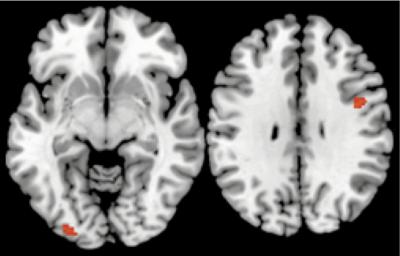
New brain imaging research from Carnegie Mellon University provides some of the first evidence showing how the brain unconsciously processes decision information in ways that lead to improved decision making. Credit: Carnegie Mellon University
When faced with a difficult decision, it is often suggested to “sleep on it” or take a break from thinking about the decision in order to gain clarity. But new brain imaging research from Carnegie Mellon University, published in the journal “Social Cognitive and Affective Neuroscience,” finds that the brain regions responsible for making decisions continue to be active even when the conscious brain is distracted with a different task. The research provides some of the first evidence showing how the brain unconsciously processes decision information in ways that lead to improved decision-making.
A study from Karolinska Institutet in Sweden has shown that neurons in our brain ‘mirror’ the space near others, just as if this was the space near ourselves. The study, published in the scientific journal Current Biology, sheds new light on a question that has long preoccupied psychologists and neuroscientists regarding the way in which the brain represents other people and the events that happens to those people.
New drugs which may have the potential to stop faulty brain cells dying and slow down the progression of Parkinson’s, have been identified by scientists in a pioneering study which is the first of its kind.
Neuroscientists have discovered that a virtual-reality hand, which is synchronized to “pulse” in time to an individual’s heartbeat, creates the illusion in the brain of “body ownership” – with the brain believing the hand is part of its own body.
Cornell researchers have developed a reliable method to distinguish memory declines associated with healthy aging from the more-serious memory disorders years before obvious symptoms emerge. The method also allows research to accurately predict who is more likely to develop cognitive impairment without expensive tests or invasive procedures.
People who suffer from the common gastrointestinal disorder irritable bowel syndrome (IBS) have more stress-related memory problems than others, according to a new study. The researchers also found that levels of the stress hormone cortisol were related to poor memory performance. While stress has long been known to affect gut symptoms, this is the first study showing that stress also impacts on cognition in IBS.
In a new study using functional magnetic resonance imaging (fMRI), researchers have found that the same brain networks that are activated when you’re burned by hot coffee also light up when you think about a lover who has spurned you.
Study Suggests Our Brains Have a ‘Sixth Sense’
Scientists may have discovered a “sixth sense” that relates to something called numerosity, which involves the ability to rapidly assimilate the number of objects within one’s field of vision. The team behind the study used fMRI scans to highlight the activity of a key area of the brain, which seemed to alter its response based upon the number of objects perceived.
Dubbed a “number sense,” the phenomenon is believed to manifest in a part of the brain called the posterior parietal cortex, situated around the crown of an individual’s head. The study’s lead researcher, Ben Harvey, who works at the Utrecht University in the Netherlands, explained that most people don’t need to methodically count a small number of objects presented to them, “… we just know how many there are straight away.” This has led many people to maintain that a person’s numerosity powers represent something akin to a “sixth sense.”
Weekly Neuroscience Update

Nucleus accumbens by The Brain from Top to Bottom
A person’s intensity of Facebook use can be predicted by activity in a reward-related area of the brain, according to a new study published in the open-access journal Frontiers in Human Neuroscience.
Sleep helps the brain consolidate what we’ve learned, but scientists have struggled to determine what goes on in the brain to make that happen for different kinds of learned tasks. In a new study, researchers pinpoint the brainwave frequencies and brain region associated with sleep-enhanced learning of a sequential finger tapping task akin to typing, or playing piano.
Alcohol intoxication reduces communication between two areas of the brain that work together to properly interpret and respond to social signals, according to researchers at the University of Illinois at Chicago College of Medicine.
Brain scans of people who say they have insomnia have shown differences in brain function compared with people who get a full night’s sleep.
The age at which children learn a second language can have a significant bearing on the structure of their adult brain, according to a new study.
This Is Your Brain on Facebook

 inside-the-brain.com