Weekly Neuroscience Update

Melodic pitch, pitch-change, and expectation modulate STG activity during music listening. (A) Three melodic features visualized for an example melody. (B) Electrodes across all participants (N = 8) plotted on a common brain. Color indicates the peak evoked high-frequency activity (HFA) averaged across all musical phrases. (C) Responses at three example electrodes demonstrating distinct tuning to pitch. Credit: Science Advances (2024)

Researchers have developed a precise map of what is happening in the cerebral cortex when someone hears a melody.

Scientists have made a groundbreaking discovery, identifying a rare lipid as a crucial factor in ferroptosis, a unique form of cell death. The findings provide new detail on how cells die during ferroptosis and could improve understanding of how to stop ferroptosis in contexts where it is harmfully occurring– in neurodegenerative diseases, for example– or induce it in contexts where it could be useful, such as using it to kill dangerous cancer cells.

Our brains are “programmed” to learn more from people we like – and less from those we dislike. This has been shown by researchers in cognitive neuroscience in a series of experiments.

An intensive meditation-based intervention (iMI) significantly improves positive symptoms, particularly refractory hallucinations and delusions, in male patients with schizophrenia, according to a new study.

Indigenous people may be more likely to have a stroke than non-Indigenous people, according to a systematic review that looked at populations around the world.

A new study highlights the critical link between sleep, circadian rhythms, and psychiatric disorders, suggesting that disturbances in sleep and internal body clocks can trigger or exacerbate mental health issues. The research underscores the prevalence of sleep-circadian disturbances across all psychiatric disorders, pointing to the need for holistic treatments that address these factors.

For individuals with post-COVID-19 condition, cognitive symptoms are common, according to a study published online Feb. 14 in JAMA Network Open.

Researchers have developed an artificial intelligence model that accurately determines the sex of individuals based on brain scans, with over 90% success. This breakthrough supports the theory that significant sex differences in brain organization exist, challenging long-standing controversies.

A new population-based study reveals the roles of maternal and fetal genes in the growth of a baby’s cerebral cortex.

A new study explains how dopamine influences movement sequences, offering hope for Parkinson’s disease (PD) therapies. Researchers observed that dopamine not only motivates movement but also controls the length and lateralization of actions, with different neurons activating for movement initiation and reward reception.

New research sheds light on what goes on inside people’s heads as they make decisions to obtain information about the future.

Moderate/severe and penetrating traumatic brain injury (TBI) are associated with an increased risk for subsequent development of brain cancer, according to a study published online Feb. 15 in JAMA Network Open.

For the first time, researchers have mapped out the proteins implicated in the early stages of motor neuron disease (MND).

In a study published in the Journal of Neuroscience, scientists demonstrated the effectiveness of using low-intensity focused ultrasound to modulate the activity in a critical region in the brain that processes and regulates pain signals.

Finally this week, new research shows how empathy can be socially transmitted.

Weekly Neuroscience Update

Credit: Neuron (2024). DOI: 10.1016/j.neuron.2024.01.013

A new study has found the immune system in the blood of Alzheimer’s patients is epigenetically altered. That means the patients’ behavior or environment has caused changes that affect the way their genes work.

A team of researchers has developed a breakthrough new blood test for schizophrenia, a psychiatric disorder that includes hallucinations and delusions.

Many patients continue to struggle in the wake of the pandemic as they grapple with ongoing symptoms triggered by COVID-19 infection, a condition commonly known as long COVID. However, the onset of symptoms such as brain fog, fatigue, headache, and other types of pain is not unique to COVID infection, according to a new study.

Researchers have discovered a molecular complex crucial for the transport of mitochondria within neurons, offering new insights into preventing neurodegenerative diseases. 

A landmark advancement in neural prosthetics has been made, demonstrating the ability to recall specific memories using a newly developed memory decoding model (MDM). The study, involving 14 adults with epilepsy, showed that MDM stimulation significantly improved memory performance, particularly in those with impaired memory, offering hope for treating conditions like Alzheimer’s disease, stroke, or head injury. This research signifies a major step toward creating interventions that can restore lost memory functions, potentially aiding individuals in living more independently.

A new study reveals that excessive stress during adolescence can lead to long-lasting changes in gene expression in the brain, particularly those related to bioenergy functions.

Researchers developed an innovative AI tool, DeepGO-SE, that excels in predicting the functions of unknown proteins, marking a significant advance in bioinformatics. Leveraging large language models and logical entailment, this tool can deduce molecular functions even for proteins without existing database matches, offering a groundbreaking approach to understanding cellular mechanisms.

Researchers have identified cortical gray matter thinning as a potential early biomarker for dementia. 

Smoking not only affects immune responses in the short term but also leaves a lasting imprint on the body’s defense mechanisms. This is the finding recently made by a team of scientists at the Institut Pasteur using the Milieu Intérieur cohort of 1,000 healthy volunteers, established to understand variability in immune responses.

MIT neuroscientists have found that the brain’s sensitivity to rewarding experiences—a critical factor in motivation and attention—can be shaped by socioeconomic conditions.

Taking an anticoagulant, or blood-thinning medication, can increase one’s risk of—or exacerbate—a brain bleed, also known as a brain hemorrhage, which is the deadliest type of stroke. Now, new research finds that faster treatment for these patients is associated with a greater likelihood of survival.

Finally this week, language and culture may influence how our brains process emotional faces according to new research.

The Neuroscience of Romance: This is Your Brain in Love

Throughout history, love has captivated human beings as a complex and powerful emotion. From Shakespeare’s poetic verses to the modern scientific exploration of the brain, the phenomenon of falling and being in love has been a subject of fascination. As neuroscience advances, researchers are now able to peer into the workings of the brain and understand the chemical and neural processes involved in love.

The Chemistry of Love

At the heart of the love experience is a cocktail of chemicals that shape our emotions. Dopamine, a neurotransmitter known as the “feel-good” chemical, floods the brain in the initial stages of attraction. This surge in dopamine is responsible for new love’s euphoric feelings.

Another key player is oxytocin, known as the “love hormone” or “cuddle hormone.” Intimacy, bonding, and physical touch release oxytocin, which fosters trust between partners and deepens emotional connections.

Love is also governed by serotonin, a neurotransmitter that affects mood and happiness. Serotonin levels can fluctuate when we are in love, affecting our mood and affecting how we experience emotion.

The Role of the Brain

Neuroimaging studies using techniques like functional magnetic resonance imaging (fMRI) have provided valuable insights into the brain regions involved in the experience of love. The ventral tegmental area (VTA), a region associated with reward and motivation, becomes highly active, releasing dopamine and contributing to the pleasurable sensations of love.

The caudate nucleus, part of the brain’s reward system, is also implicated in romantic love. Studies have shown increased activity in the caudate nucleus when individuals view pictures of their loved ones, indicating its role in the reinforcement of romantic attachment.

The Impact of Love on Cognitive Function

Interestingly, being in love has been shown to influence cognitive function. Research suggests that individuals in the early stages of romantic love may experience impaired concentration and obsessive thinking about their beloved. This heightened focus on the object of affection is believed to be a result of increased activity in the prefrontal cortex, a region associated with decision-making and personality expression.

Long-Term Love and Attachment

As relationships progress, the dynamics of love evolve. Long-term love and attachment are associated with the release of oxytocin, fostering a deeper connection between partners. The brain’s reward system continues to play a role, but the nature of the reward shifts from the thrill of new love to the comfort and security of a stable, committed relationship.


Watch this interesting TED talk for more on this topic.

Weekly Neuroscience Update

Illustration of the triple-wise correlation network model. Credit: Science Advances (2024). 

By mapping brain activity in three dimensions, researchers have achieved a more detailed picture of how the brain changes with age.

A new study reveals epigenetic alterations in the immune system of Alzheimer’s patients’ blood, suggesting environmental or behavioral factors could influence Alzheimer’s risk. The study indicates these epigenetic changes affect genes associated with Alzheimer’s susceptibility, potentially due to factors like viral infections or pollutants.

Almost half of people who suffer a sports-related traumatic brain injury are still experiencing physical symptoms after six months according to new research findings.

A new study suggests a novel link between depression and higher body temperatures, analyzing data from over 20,000 participants worldwide. While the causal relationship remains unclear, findings indicate that body temperature increases with the severity of depression symptoms, offering a potential new avenue for treatment.

Acupuncture may improve language function in patients with poststroke motor aphasia, according to a new study.

Researchers have found that adolescents being bullied by their peers are at greater risk of the early stages of psychotic episodes and in turn experience lower levels of a key neurotransmitter in a part of the brain involved in regulating emotions.

The contraceptive pill also affects the brain and the regulation of emotions, say researchers.

An international research team has developed a computational biology tool, based on multi-level network analysis, to achieve an integrated vision of multiple sclerosis. This tool could be used to study other complex diseases such as types of dementia.

A new scanning study of 390 babies has shown distinct patterns between term and pre-term babies in the moment-to-moment activity and connectivity of brain networks.

Researchers have developed a machine-learning tool that accurately identifies individuals at high risk of psychosis through MRI brain scans. This innovative approach, which achieved an 85% accuracy rate in training and 73% using new data, offers a promising avenue for early intervention in psychosis, potentially improving treatment outcomes.

A new study highlights music’s crucial role in enhancing the quality of life for people aged 50 to 80, with 98% reporting at least one health benefit from engaging with music.

Researchers have unveiled the “MiniTouch,” a revolutionary device that equips prosthetic limbs with the ability to convey thermal sensations to amputees, bridging a significant gap in sensory feedback technology. This breakthrough allows a transradial amputee to differentiate between objects of varying temperatures and experience more human-like touch, enhancing both functional use and emotional connection with the prosthesis.

Scientists have found a new treatment target for CDKL5 deficiency disorder (CDD), one of the most common types of genetic epilepsy.

A new study presents a compelling case for the integration of Large Language Models (LLMs) like ChatGPT into neuroscience, highlighting their potential to transform research by analyzing vast datasets beyond human capability. The authors suggest that LLMs can bridge diverse neuroscience fields by communicating with each other, thus accelerating discoveries in areas such as neurodegeneration drug development.

Finally this week, researchers have developed a robotic sensor that incorporates artificial intelligence techniques to read braille at speeds roughly double that of most human readers.

Weekly Neuroscience Update

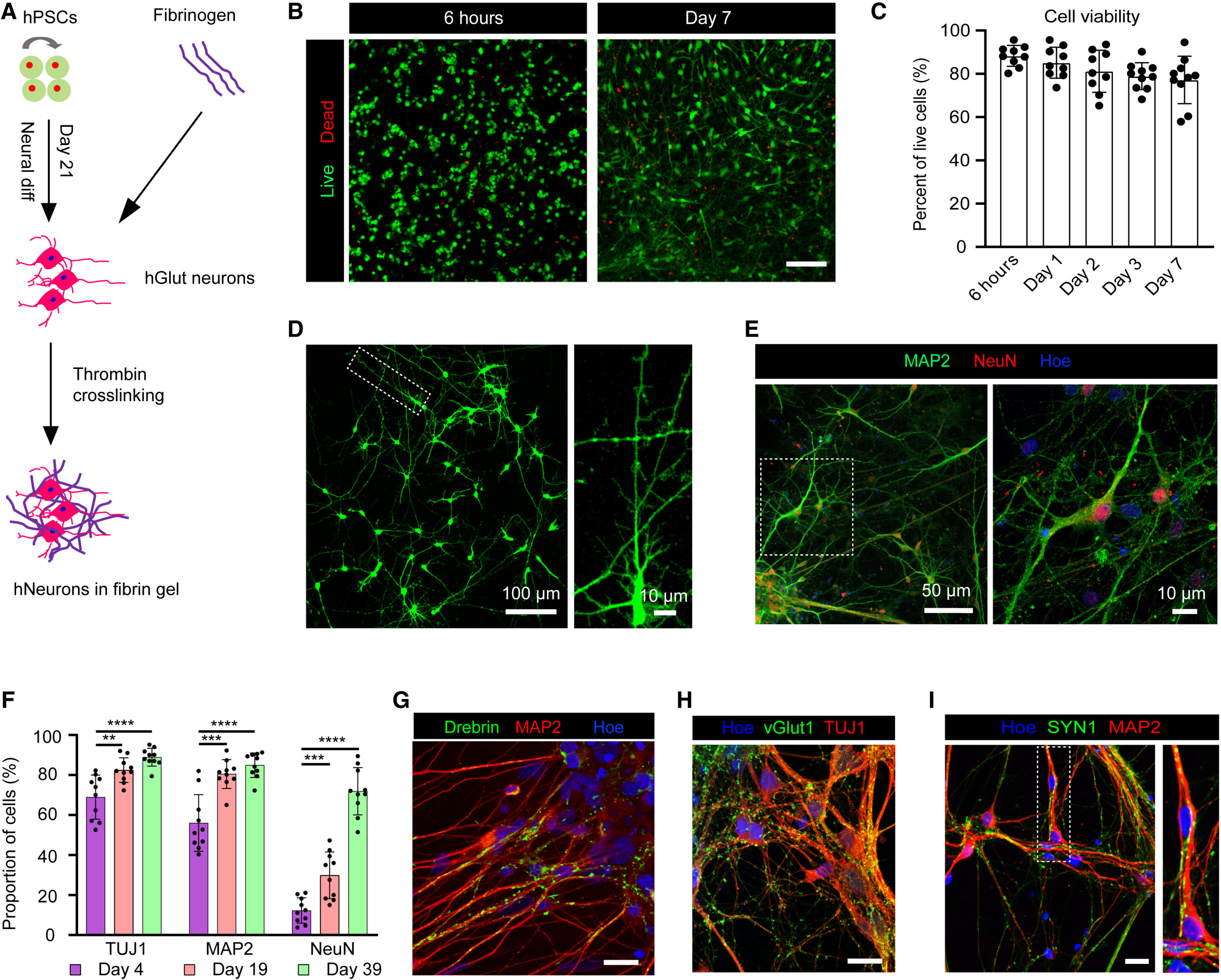
Credit: Cell Stem Cell (2024). DOI: 10.1016/j.stem.2023.12.009

Researchers have developed the world’s first 3D-printed brain tissue that grows and behaves similarly to natural brain tissue, marking a significant leap forward for neurological and neurodevelopmental disorder research.

For patients with Parkinson disease differences in quality of life outcomes are seen with deep brain stimulation of the subthalamic nucleus (STN-DBS), according to a recent study.

New findings published in the journal Nature Neuroscience have shed light on a mysterious pathway between the reward center of the brain that is key to how we form habits, known as the basal ganglia, and another anatomically distinct region where nearly three-quarters of the brain’s neurons reside and assist in motor learning, known as the cerebellum.

Researchers have shown that a blood test can pinpoint the underlying cause of brain injury in newborns.

A new study suggests that high-intensity training (HIT), compared to conventional training, may improve walking ability in patients with chronic traumatic brain injury (TBI). Possible secondary benefits may include improved aerobic capacity/efficiency and cognition.

A team of scientists has unveiled a potential game-changer in the fight against glioblastoma, the most common and currently incurable form of brain cancer.

Combining brain stimulation with intense physical rehabilitation helped stroke survivors recover movement in their arms and hands and maintain these improvements for one year, according to a study to be presented at the American Stroke Association’s International Stroke Conference 2024.

Psychologists have investigated the extent to which neuromodulation of the brain with ultrasound waves influences people’s behavior. The results can also be used as a basis for therapeutic purposes.

A preliminary study reveals that intravenous injections of ginkgo biloba components could significantly improve early cognitive recovery in ischemic stroke patients. Conducted across multiple centers in China, the research tested the effects of ginkgo diterpene lactone meglumine (GDLM) on 3,163 stroke survivors, showing notable improvements in cognitive scores compared to a placebo group.

The brains and blood of people with a history of excessive drinking show cellular evidence of premature aging.

A new study gives insights into the underlying mechanisms of the formation of protein clumps in Alzheimer’s disease. The study could pave the way for new treatments for this devastating neurodegenerative disorder.

Finally, this week, engaging in music throughout your life is associated with better brain health in older age, according to a new study.