Author Archives: Editor

Early genetic markers of Alzheimer’s risk identified

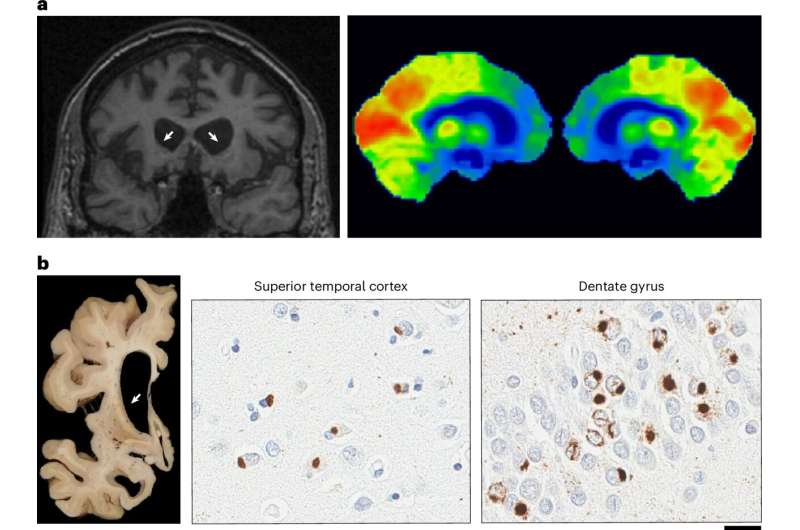
Alzheimer's brain on the left, normal brain on the right

The brains of Alzheimer’s patients – like the one on the left – are more shrunken than normal ones

Genetic markers that could help highlight who is at risk of developing Alzheimer’s disease have been identified by US scientists.

The research in Neuron identifies mutations that affect the build-up of certain proteins in the brain.

Tangles of a kind of tau called phosphorylated tau (ptau) are a hallmark of the disease. High levels of these tau proteins increase the chance of having the disease.

One of the new gene variants identified by the Washington University School of Medicine team was also shown to be linked to a small increased risk of developing Alzheimer’s and a greater risk of cognitive decline.

The team used genetic information from more than 1,200 people, significantly larger than previous studies in this area.


Weekly Neuroscience Update

The phrase “practice makes perfect” has a neural basis in the brain. Researchers have discovered a set of common changes in the brain upon learning a new skill. They have essentially detected a neural marker for the reorganization the brain undergoes when a person practices and become proficient at a task.

Researchers at the University of East Anglia have made a discovery in neuroscience that could offer a long-lasting solution to eating disorders such as obesity.

A new study conducted by The Mind Research Network , shows that neuroimaging data can predict the likelihood of whether a criminal will reoffend following release from prison.

The ability to communicate in multiple languages not only provides doorways to new cultural and social experiences but also apparently promotes brain growth and staves off the onset of dementia and Alzheimer’s disease.

Researchers have discovered a potential way to decode your dreams, predicting the content of the visual imagery you’ve experienced on the basis of neural activity recorded during sleep.

Brain researchers at Barrow Neurological Institute have discovered that we explore the world with our eyes in a different way than previously thought. Their results advance our understanding of how healthy observers and neurological patients interact and glean critical information from the world around them.

In a study designed to differentiate why some stroke patients recover from aphasia and others do not, investigators have found that a compensatory reorganization of language function to right hemispheric brain regions bodes poorly for language recovery. Patients who recovered from aphasia showed a return to normal left-hemispheric language activation patterns. These results, which may open up new rehabilitation strategies, are available in the current issue of Restorative Neurology and Neuroscience.


Weekly Neuroscience Update

A still-shot of a wave of brain activity measured by electrical signals in the outside (left view) and inside (right view) surface of the brain. The colour scale shows the peak of the wave as hot colours and the trough as dark colours. (Credit: © D.A.)

Our understanding of brain activity has traditionally been linked to brain areas – when we speak, the speech area of the brain is active. New research by an international team of psychologists shows that this view may be overly rigid. The entire cortex, not just the area responsible for a certain function, is activated when a given task is initiated. Furthermore, activity occurs in a pattern: waves of activity roll from one side of the brain to the other.

A new study has shown that a drug widely used to treat Parkinson’s Disease can help to reverse age-related impairments in decision-making in some older people.

Researchers have discovered that the extra chromosome inherited in Down syndrome impairs learning and memory because it leads to low levels of SNX27 protein in the brain.

A new study published in Nature reveals some of the dynamics of neural activity when people articulate syllables commonly used in English.

A new study suggests that migraines are related to brain abnormalities present at birth and others that develop over time. The research is published online in the journal Radiology.

A research team studying alcohol addiction has new research that might shed light on why some drinkers are more susceptible to addiction than others.


Where Is Your Brain Taking You (Part II) ?

http://whyriskit.files.wordpress.com/2012/11/2012-10-23-karen-bee.jpg?w=176&h=311What is the point about living our lives?

Today  I want to expand on a previous post – Is there an end point to us becoming more human or the fulfilment of its potential? As a neuroscientist who has studied the origins of learning and memory it has become obvious to me that the more we learn and remember the better we can predict the future.

This question can be now be answered in the context that every single human being on
the planet is unique because they posses a uniquely complex brain. In fact, the brain is so
complex that in all of human history no two brains were the same. Furthermore, this unique
combination of about 100 trillion tiny connections grows and changes through life – a work in progress from conception to death. In this way we each evolve as we journey through life.

Neurodiversity is the key to our success

The term ‘neurodiversity’ has been coined to extend the finding that every single human being is neurologically different, to view those with attention deficit hyperactivity disorder, autism spectrum disorder, Asperger syndrome, dyscalculia, dyslexia, dyspraxia, Tourette syndrome, and others as just another variation of human brain wiring, rather than a disease – and that these differences in brain wiring are authentic forms of communication, self-
expression and being.

Vive la différence!

Rather than focus on the need for a ‘cure’ what we actually need to do is to promote support- systems that allow those who are neurologically different to live their lives as they are, rather than attempting to conform to some clinical ideal – because it is these very individuals that give the rest of us unique insights and solutions by viewing the world in a different way. Take for example Albert Einstein – considered by many to have had Asperger syndrome – who single-handedly worked out the relationship between space and time and went on to model the structure of the universe as a whole.

To bee or not to bee

The advantages of neurodiversity can be seen elsewhere in nature for instance in the thermoregulation in honey bee nests. The temperature in the nest ranges between 32 and 36 degrees. If it is getting warmer the bees ventilate with their wings until the set point is reached again. However in genetically uniform colonies the bees tend to start with ventilation about the same time – causing even greater instability by producing more temperature fluctuations, whereas the nest temperature in genetically diverse colonies is more stable.

Who is in the spotlight?

Despite what some like to think – humankind is not the centre of the world but rather a very actively growing branch of the evolutionary tree. We are not destined to ‘lift ourselves above nature’ – but rather to dramatically raise the intelligence and complexity of this thing we call ‘life’ through our intellectual and spiritual evolution.

So what’s the answer?

The evolution of the human race is not going to proceed by trying to transcend it – rather we will move forward as a race by making room for each and every individual to express their personalities to the full. In this way the evolution of the human race has everything to do with our own personal development.

In short, personality equals evolution.


Weekly Neuroscience Update

Conceptual scheme of controlled release of ODN from a hydrogel composed of a CyD-containing molecular network by mechanical compression. (Credit: Image courtesy of National Institute for Materials Science)

A research group has succeeded in developing a gel material which is capable of releasing drugs in response to pressure applied by the patient.

New findings about how the brain functions to suppress pain have been published in the leading journal in the field Pain, by National University of Ireland Galway (NUI Galway) researchers. For the first time, it has been shown that suppression of pain during times of fear involves complex interplay between marijuana-like chemicals and other neurotransmitters in a brain region called the amygdala.

Researchers report that they have found a biological mechanism that appears to play a vital role in learning to read. This finding provides significant clues into the workings behind dyslexia — a collection of impairments unrelated to intelligence, hearing or vision that makes learning to read a struggle.

A new study suggests neural ‘synchrony’ may be key to understanding how the human brain perceives.

Sleep plays an important role in the brain’s ability to consolidate learning when two new potentially competing tasks are learned in the same day, research at the University of Chicago demonstrates.

New research for the first time explains exactly how two brain regions interact to promote emotionally motivated behaviors associated with anxiety and reward. The findings could lead to new mental health therapies for disorders such as addiction, anxiety, and depression.

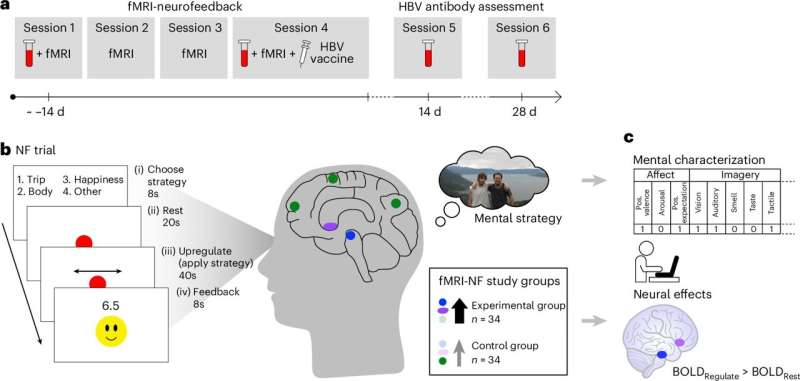
Researchers have designed a decoded functional MRI neurofeedback method that induces a pre-recorded activation pattern in targeted early visual brain areas that could also produce the pattern through regular learning.

A new study conducted by monitoring the brain waves of sleeping adolescents has found that remarkable changes occur in the brain as it prunes away neuronal connections and makes the major transition from childhood to adulthood.

New research suggests that depression, even in children, can increase the risk of heart problems later in life. Teens who were depressed as children are far more likely than their peers to be obese, smoke cigarettes and lead sedentary lives, even if they no longer suffer from depression.

Alcohol consumption affects the brain in multiple ways, ranging from acute changes in behavior to permanent molecular and functional alterations. The general consensus is that in the brain, alcohol targets mainly neurons. However, recent research suggests that other cells of the brain known as astrocytic glial cells or astrocytes are necessary for the rewarding effects of alcohol and the development of alcohol tolerance.

New research published in The Journal of Neuroscience suggests that modifying signals sent by astrocytes, our star-shaped brain cells, may help to limit the spread of damage after an ischemic brain stroke.

The prefrontal cortex is a region of the brain that acts like a filter, keeping any irrelevant thoughts, memories and perceptions from interfering with the task-at-hand. In a new study, researchers have shown that inhibiting this filter can enhance unfiltered, creative thinking.

A new study suggests that depression results from a disturbance in the ability of brain cells to communicate with each other. The study indicates a major shift in our understanding of how depression is caused and how it should be treated.


Alzheimer’s Disease – and Ways to Avoid it

Why do some people age gracefully, showing only minor and at worst, frustrating cognitive changes, while others show a more severe and disabling memory decline such as that seen in Alzheimer’s disease?

Today, as part of the Limerick Lifelong Festival, I gave a talk on the factors that trigger Alzheimer’s and described  how diet and exercise can help to prevent the disease and promote quality of life.  I will be writing more on this topic in the coming days.


Understanding ADHD and Learning Disability Part VII

In this final part of my series on understanding Attention Deficit/Hyperactivity Disorder (ADHD),  we delve more into the underlying mechanisms of the disorder.

Hyperactive flies can help us understand ADHD and learning disability.

Many researchers are seeking a better understanding of ADHD and the medications used to treat it by studying ADHD’s underlying mechanisms and working towards a better knowledge of this disorder.  In this video Professor David Anderson explains how our current understanding of ADHD (and the learning disability which can accompany it) as merely chemical imbalances in dopamine and noradrenaline is not working and shows that by studying a strain of hyperactive fruit fly (Drosophila) we can study the different nerve pathways involved in ADHD and learning disability which will help in providing safer and more effective treatments.

Small cold-water fish

There is no cure for ADHD at this time. However a recent (2012) study in the Journal of the American Medical Association  reports that fish consumption during pregnancy protects against ADHD in the child. In addition, many ADHD sufferers also report a beneficial effect of daily fish oil. If you are considering including fish in your diet then the study recommends small cold-water fish such as herring, mackerel, sardines and salmon rather than larger fish such as tuna which live much longer and thereby may accumulate the toxic metal mercury.

Further reading for those interested in the scientific experiments:

  1. Lebestky et al. (2009). Neuron, 64 (4), 522-36 PMID: 19945394
  2. Wang L, & Anderson DJ (2010). Nature, 463 (7278), 227-31 PMID: 19966787

Other Sources:

http://www.brainfacts.org/Diseases-Disorders/Childhood-Disorders/Articles/2012/Confronting-Attention-Deficit-Hyperactivity-Disorder

Related Reading

Part 1: Understanding ADHD and Learning Disability

Part 2: Understanding ADHD and Learning Disability

Part 3: Understanding ADHD and Learning Disability

Part 4: Understanding ADHD and Learning Disability

Part 5: Understanding ADHD and Learning Disability

Part 6: Understanding ADHD and Learning Disability


Weekly Neuroscience Update

UCL Medical staff discussing an image of a human brain

Researchers at University College London have made a breakthrough in the way that drugs could be delivered to the brain, tackling the difficult problem of constructing drugs which are able to pass through the blood-brain barrier – a mechanism which prevents many chemicals in the bloodstream from passing into the brain, including synthetic compounds administered as medication as well as harmful environmental toxins.

For older adults looking to sharpen their mental abilities, it might be time to log on to Facebook. Preliminary research findings from the University of Arizona suggest that men and women older than 65 who learn to use Facebook could see a boost in cognitive function.

A single concussion may cause lasting structural damage to the brain, according to a new study published online in the journal Radiology.

In an effort to better evaluate and prevent concussions and head traumas, researchers at Johns Hopkins University have developed a computer model to identify what types of jarring movements to the body can cause injury to the brain

A team of sleep researchers has confirmed the mechanism that enables the brain to consolidate memory and found that a commonly prescribed sleep aid enhances the process. Those discoveries could lead to new sleep therapies that will improve memory for aging adults and those with dementia, Alzheimer’s and schizophrenia.

How do neurons store information about past events? In the Nencki Institute of Experimental Biology of the Polish Academy of Sciences in Warsaw, a previously unknown mechanism of memory trace formation has been discovered. It appears that at least some events are remembered thanks to geometry.

It is possible to tell who a person is thinking about by analyzing images of his or her brain. Our mental models of people produce unique patterns of brain activation, which can be detected using advanced imaging techniques according to a study by Cornell University neuroscientist Nathan Spreng and his colleagues.

Columbia University Medical Center (CUMC) researchers have found the first evidence that selective activation of the dentate gyrus, a portion of the hippocampus, can reduce anxiety without affecting learning.


Understanding ADHD and Learning Disability Part VI: How is ADHD treated?

This is the sixth in a series on understanding Attention Deficit/Hyperactivity Disorder (ADHD).

Treatment

ADHD is commonly treated with parent education, school-based interventions, and medications such as stimulants (e.g., methylphenidate) and newer, nonstimulant drugs such as atomoxetine. Adults benefit from the same medications as children and may find some behavioural therapies helpful. On the behavioral side, children can be taught strategies for staying focused on a task such as following a detailed schedule, or for organizing materials. Adult ADHD can be a family problem as well as an individual problem. Because the symptoms of the disorder often wreak havoc on every member of the family, not just the individual with adult ADHD, it’s important for the entire group to undergo family therapy, even if the ADHD parent is already getting individual counselling. It is best to begin family therapy as soon as it becomes clear that the symptoms of adult ADHD are interfering with normal family functioning and thus avoid crises and emergencies that may take months or years to resolve. Family therapy may include teaching family members new skills and coping strategies, and therapy in which family members support and encourage each other and learn to communicate more effectively.

Drug treatment of ADHD

Many children with ADHD may also need medication. The use of stimulants to treat ADHD was first described in 1937.Since the late 1960s, stimulants such as Ritalin® or Adderall® have been prescribed to treat children with ADHD.

2011-12 shortage in U.S. market

In 2011 and 2012, there was a shortage of Ritalin® and Adderall® in U.S. pharmacies. Some say the shortage was caused by the US Drug Enforcement Administration’s (DEA) annual limits on the manufacture of controlled substances. The DEA argues that drug manufacturers had caused the shortage by applying their quotas toward more lucrative kinds of amphetamine-based medications. The shortage was resolved by November 2012. Currently, between 4 and 6 million children in the United States take one of these medications, which reduce hyperactivity and impulsivity, help improve the ability to focus, and even improve physical coordination. In fact, medications are so effective in helping people with ADHD that a recent shortage wreaked havoc for many families

Drug action

Nonetheless, there is concern about giving children a drug that is potentially addictive. Methylphenidate, the active ingredients in Ritalin®, acts like a weak form of cocaine to increase dopamine and noradrenaline levels but tend to do it all over the brain sometimes resulting in unwanted side-effects such as nervousness, drowsiness, insomnia, suspicion and paranoia. Concerta®is a slow release of methylphenidate while Daytranta® delivers the drug via a skin patch, similar to those used for nicotine replacement therapy.Adderall® is a mixture of amphetamine salts which also increase dopamine and noradrenaline levels but has a higher potential for abuse than Ritalin®.

Controversy

In addition, there is a worry that ADHD may be over-diagnosed, leading to the diagnosis and treatment of high-energy children who have difficulty in the classroom, but are medically normal. For this reason the effectiveness of treatments should be re-evaluated in each person on a regular basis to determine if the current treatment continues to be optimal. There are some reports that daily intake of fish oil can be helpful.

Related Reading

Part 1: Understanding ADHD and Learning Disability

Part 2: Understanding ADHD and Learning Disability

Part 3: Understanding ADHD and Learning Disability

Part 4: Understanding ADHD and Learning Disability

Part 5: Understanding ADHD and Learning Disability


Understanding ADHD and Learning Disability Part V: Diagnosing ADHD

This is the fifth installment in a series on understanding Attention Deficit/Hyperactivity Disorder (ADHD).  

Diagnosing ADHD – it’s harder than you think.

Currently there is no diagnostic test for ADHD. Diagnosis requires a clinical interview, parent and teacher ratings for children, and self and other ratings for adults. In addition, it is estimated that two-thirds of children diagnosed with ADHD have additional learning disorders or other mental health or neurodevelopmental conditions.   This makes it all the more important that the diagnosis is made in a multi-disciplinary environment, where the child or adult is assessed by a medical doctor, counsellor, clinical psychologist and if necessary by a psychiatrist. This is important because problems with attention can be triggered by many other conditions; in particular, adults may have attention issues along with other disorders such as depression.

….and there’s more…

Other factors have been found to affect diagnosis of ADHD. For example, the youngest children in a class are much more likely to be diagnosed as having ADHD compared to their older counterparts in the same year. This is because these children may behave more hyperactively, not because they have ADHD, but because they are younger and developmentally behind their classmates. In fact, it is estimated that about 20% of children given a diagnosis of ADHD are misdiagnosed because of the month they were born with children born in December (the youngest in class) 39% more likely to be diagnosed with ADHD than those born in January (the oldest in class).

Journal reference: http://www.ncbi.nlm.nih.gov/pubmed/22392937

Part 1: Understanding ADHD and Learning Disability

Part 2: Understanding ADHD and Learning Disability

Part 3: Understanding ADHD and Learning Disability

Part 4: Understanding ADHD and Learning Disability


Follow

Get every new post delivered to your Inbox.

Join 520 other followers